How Google’s E-E-A-T Framework Impacts Brand Visibility in AI Search Results
Learn how Google’s E-E-A-T framework — Experience, Expertise, Authoritativeness, and Trustworthiness — impacts your brand’s visibility in AI Overviews and featured snippets. Discover actionable tips to strengthen your credibility and thrive in AI-driven search.
-
Jul 14, 2025
TL;DR: Adhering to Google’s E-E-A-T framework is essential for visibility in AI-powered search. It’s not just about having great content; your brand needs to show clear signals of credibility through expert bios, authoritative backlinks, structured data, and aligned messaging across SEO, PR, and content. Here's how it works.
Trying to get your brand to show up in Google AI overviews and featured snippets?
Your credibility is as important as your content.
Learn how Google's E-E-A-T framework considers both and what proactive steps you can take to optimize your brand for AI visibility.
What is E-E-A-T?
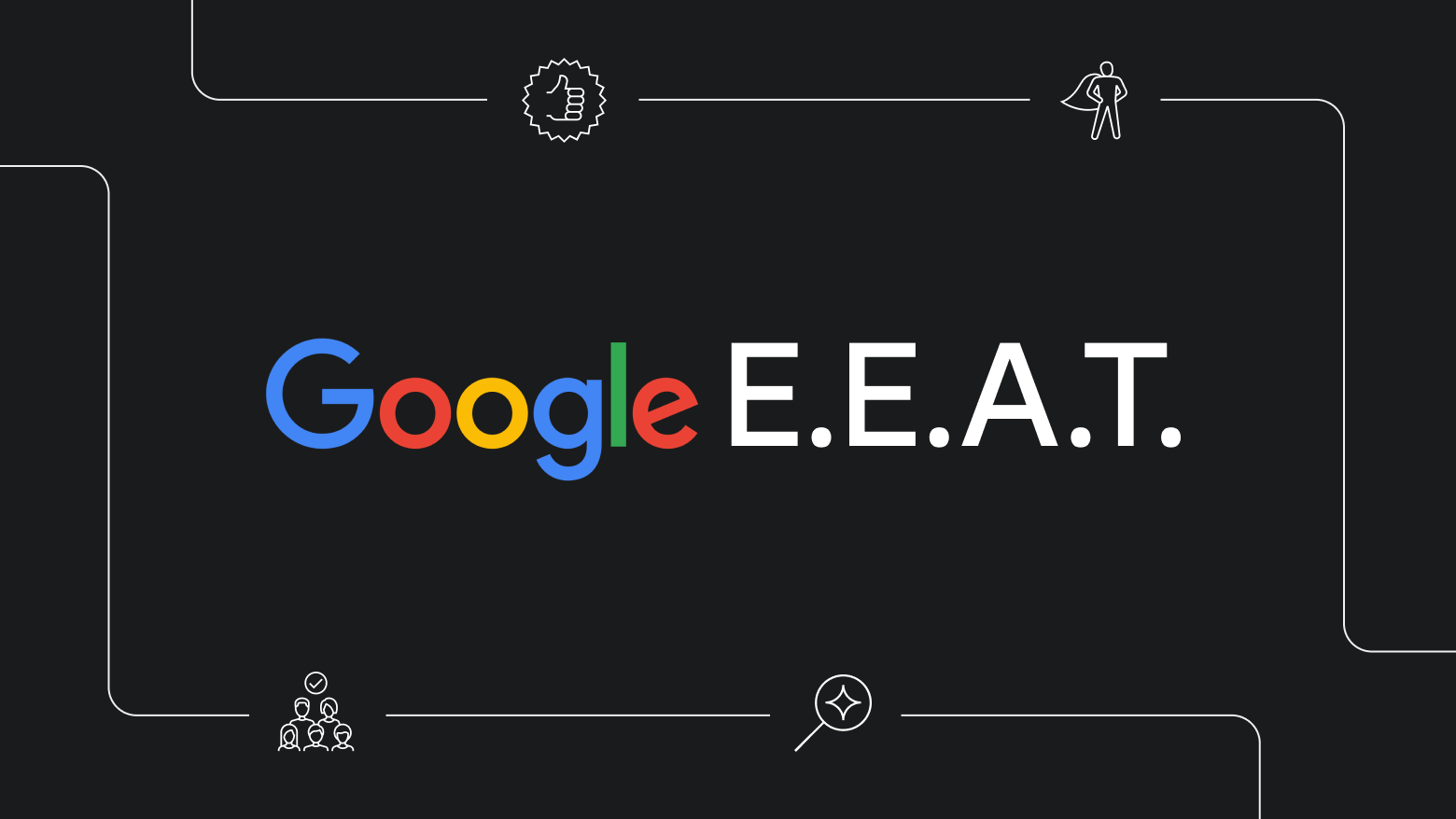
Google's E-E-A-T framework, which stands for Experience, Expertise, Authoritativeness, and Trustworthiness, has long been a part of its quality guidelines. However, with the rapid advancements in AI-driven search summaries and direct answers, E-E-A-T directly influences which brands are visible, which are cited, and which are overlooked in search results.
E-E-A-T originated as part of Google's search quality evaluator guidelines. While not considered to be a direct ranking criterion, this framework defines the kind of content Google considers to be ideal, especially for topics where trust matters.
Here's what E-E-A-T stands for:
- Experience: Lived or practical knowledge. In other words, does the author know what they're talking about?
- Expertise: Professional or academic qualification. What makes the source qualified to share information on the topic?
- Authoritativeness: Data citations and references., Is the brand (domain) reliable?
- Trustworthiness: Indicators of authenticity and good faith. Why should people trust your website?
According to Google, trust is the most important part of the equation, but you need all the ingredients to create trust.
How E-E-A-T influences Google’s AI results
Google’s new AI features — like AI Overviews, AI Mode, and AI-organized results — are actively reshaping the search experience.
These tools, all powered by Google's Gemini model, rely on complex algorithms to assess and summarize content across the web.
One shared, persistent signal? E-E-A-T.
Whether you're trying to surface in an AI overview or earn a top spot in an AI-organized SERP, your content needs to clearly demonstrate experience, expertise, authoritativeness, and trustworthiness.
While the exact criteria can vary, AI frequently looks for:
- Authoritative websites with significant backlinks. Sites with expert-written content that includes structured data stand out.
- Trustworthy brands that are known for providing accurate and valuable information. You might have great content, but you're less likely to surface if your brand doesn’t project credibility.
Fact is, AI is reshaping what SEO looks like. While traditional SEO still matters, it’s no longer enough to win.
Where E-E-A-T signals come from (and how to strengthen them)
You can’t fake brand authority, but you can make it easier for AI to recognize.
To help optimize your brand for success with traditional SEO and emerging AI search:
- Add author bios and credentials. Use author’s real names and link to professional profiles highlighting their expertise.
- Seek out external validation. Make sure reputable publishers are backlinking to your work. When other credible sources cite you, Google pays attention. Work with your PR teams to land backlinks via respectable outlets.
- Don’t ignore technical SEO. Continue applying technical SEO best practices (using HTTPS, accessible design, privacy polices, etc). Pages should be easy to navigate to and have SEO friendly URLs. Making sure your website is safe for visitors and easy to navigate helps increase your brand credibility.
- Make it easy for traditional and AI search engines to parse your website. Using structured data provides Google’s bots and crawlers an easy way to analyze and ‘understand’ the content on your website. It’s also very important that your structured data (metadata, product details, customer profiles) match your non-structured data (videos, images, social media posts) that exist both on your website and on other sites (business listings, review pages, etc) that contain information about your brand.
Most importantly, you need to align your teams. SEO experts, PR leads, and brand marketers should all be working from the same playbook. If your left hand is building authority and your right hand is publishing anonymous content? Your brand is sending mixed signals that are likely to result in decreased performance.
The big question: How to build credibility
Establishing a reputation as a topical expert takes time and deliberate effort.
Here are a few things you can do to set your brand off on the right path:
- Use first-party data and original research to build trust and enhance discoverability. Prioritize publishing proprietary studies, customer service insights, and industry benchmarks to position your brand as a primary knowledge source. Also, properly cite original data in your content to attract backlinks and signal authority to AI models.
- Establish transparent editorial standards and clearly outline your process. Be meticulous about verifying sources, fact-checking, avoiding sensationalism, and consistently updating your content. Focus on publishing content that answers current prospect and customer questions, and ensure the publish dates are publicly visible.
- Craft a comprehensive "About Us" page detailing your brand's mission, leadership team, history, and credentials. Include links to reputable third-party profiles, memberships, and speaking engagements to enhance credibility and demonstrate authority. Introduce the individuals behind your brand.
By emphasizing the importance of backlinks and external validation, algorithms can inadvertently favor established brands and institutions. As a result, newer, lesser-known brands may struggle to demonstrate E-E-A-T, even if they're genuinely knowledgeable.
Emerging experts should focus on long-tail keyword opportunities, answer natural language customer questions, and create a network of high-value backlinks to help establish authority.
SEO best practices have changed
Amidst all the changes spurred by AI, Google remains focused on surfacing useful, reliable content backed by credible expertise. What's new is how this content is presented. Searchers see fewer blue links and more featured snippets, AI overviews, voice results, and chat-style answers.
To appear in these emerging search formats, strong E-E-A-T (Experience, Expertise, Authoritativeness, and Trustworthiness) is crucial. That means brands must go beyond keywords and follow the steps above to demonstrate value and credibility.
See where your brand stands
Ready to find out how your brand appears in both traditional and AI-driven search? Scout can show you — and can highlight where you need to strengthen your signals. Run a Scout scan now.