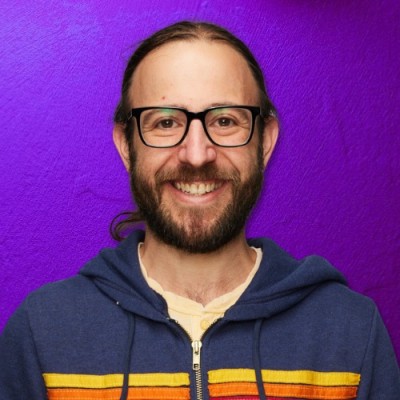
In this special episode of The Visibility Brief, recorded live at SEO Week, Rebecca Colwell is joined by Garrett Sussman (Director of Marketing at iPullRank) and Christian Ward (Chief Data Officer at Yext) for a candid reflection on where the industry actually stands today.
A year ago, AI search felt like a novelty. New tools, new ideas, and a lot of speculation. Today, the tone has shifted. The excitement hasn't disappeared – but it's been replaced by something more grounded: uncertainty, urgency, and a growing realization that the rules are changing faster than most teams can keep up.
So what's actually changed in the last 12 months? And more importantly, what hasn't?
This conversation goes beyond tactics. It's about how SEO is evolving as a function, why so many teams are still "admiring the problem," and what it will take to move from understanding AI to actually acting on it.
The episode breaks down:
Why the industry feels more mature, but still a bit stuck
The gap between understanding AI's impact and actually changing strategy or execution
Why technical understanding of AI pipelines matters
Why SEO is positioned to lead…but often doesn't
Why content strategy is shifting back toward uniqueness and context
Why brands are struggling to define success in AI visibility
The tools are evolving. The models are improving. The opportunity is real. But most brands haven't made the shift yet, and that gap is where the next wave of advantage will be created.
Episode Links
Transcript
00:00:08.240 — 00:05:10.220 Welcome to the Visibility Brief live from SEO week. We are wrapping up today for sitting down for a conversation to reflect on the week. I am thrilled to be joined by Garrett Sussman, Director of Marketing at Apple Rank and an incredible personality at the event all week and our very own Christian Ward, chief Data Officer at Yext, who knocked our socks off this morning with a killer presentation. Super excited to dig into that as well. So welcome.
Thank you. Thank you for having us. This is fun. You're you're not too bad yourself. Thank you. Yes, I appreciate that. This is my first year at SEO week. It's been great, but I know you were both here last year, so I am curious, um, what has changed the most? And maybe Garrett, I'll start with you because you you've been involved in the planning, and he throws it. Yeah, yeah. Start hard. No, I mean, the reality is last year. And it's funny because at Apple rank my king and then Christian. Like we are familiar with this topic, but I feel like it felt so new to everyone. Everybody had been overwhelmed with so much noise since ChatGPT came out in 2022, and so we've got two years leading up to people had nothing, still had settled, and especially in the context of organic search and AI search. And so I feel like last year there was a lot of novelty and new ideas that people weren't familiar with, even if they were old ideas.
I feel now we have 12 months of really looking at this problem, sitting with it, trying to understand it. Nobody's figured anything out yet, but at least there's a certain amount of maturity in the conversations. Yeah. So being an attendee and I don't actually get to attend many of these events, um, I was at SEO week last year most of the time, and most of the time this year. and realistically I think it was very much the energy last year was different than the energy this year, and it's a lot of because then it was new. People were excited. There was still a lot of denial. Really fascinating that it was like I was I think I said on stage, you know, I remember when someone called the internet a fad in the 19 like 1997, and there was still a lot of that going on where people were like, it'll never overtake. Like Google will never merge into search, like it'll just be an overview. I'm like, guys like, that's definitely going to happen. And so this year, I actually think it's a little more subdued on the excitement and much more on what are we doing about this, because it's not existential to the SEO community by any means.
I think the SEO community is the best aligned to be the answer for this. For every major brand, corporation, local business, it's more that they still don't have more data. And so what's happening is, is I think I might have said, you know, I feel like everyone's admiring the problem. Meaning they know there's a problem, and now there's some data on it, and they're staring at pretty charts about the problem, but they're not doing anything about the problem and what they're doing. It really does feel like the early days of search engine optimization. It really feels that at that beginning of where we were trying and testing things, and it was a lot of like, oh, this worked. Oh, that worked. And so I don't think many of the things that we have uncovered are the ultimate answer, but I think that the tried and true things really came out in this conference, meaning like structured data and more accessible data and real time and real time. It's probably new this year. I think people are finally waking up to real time beats everything else. But but that's that's the big change. It's sort of went from this almost like edgy hyper ness to now it's like a little more solemn of like, listen, that presentation that gave me something I could use, this presentation, know like people are a little more rigid on wanting something from this conference, I agree. What do you think?
Yeah, I think the other part of it too. And you speak to this a lot, Christian, is the idea of your almost locus of control, like in a digital sense of there. It's uncomfortable because there's so much that it's the history of the internet that's being used against us. Everything has a digital footprint and you can't just erase it. There's no like Mr. Clean for your brand. And so I think in this conversation, in this conference, there's been a lot of discussions about, okay, depending on the property, the channel, what can you control. Go out and control it. That's table stakes. And then what can you influence. And that's where you need to really start to position your strategy. Because if you're not, if you don't control the narrative that you can control, the narrative is written about you. And that is not good for your brand. Yeah, yeah. As a marketer, that drives me nuts. Just the idea that someone else is telling my story. I attended a lot of the sessions, and I heard a confluence of opinions in certain areas, and then some divergent opinions in other areas. So I'm curious. Um, what was the best advice that you heard this week or the thing that really connected with you?
00:05:11.940 — 00:06:51.800 Sure. So, um, it's a little bit because of where he sits. Um, but Krishna, um, from Microsoft, who is actually building the pipelines and is responsible for it, and I actually really got lucky in having a conversation with him thanks to Garrett separately. And, um, he was outstanding. And the advice that he was really trying to get people to wake up to is how the models work and how the pipeline works. And if anyone attended that, it literally was a roadmap of not what people are getting at, because he sits at the point where Bing's model and remember, Bing powers much of the other models, right?
So he's actually seeing what it's doing and the, the the concept of not everything is grounded yet, but it's coming. Meaning everything is going to start checking in real time. It's just compute heavy right now. And so training still is important. But to your point, Rebecca, on not controlling the path like or going back and changing the past and the training data, that's going to become less and less important because the compute is going to get better and better and more efficient. So I thought he had some of the best advice. And then I will also say, I thought Noah Lerner did a very good job of throwing up there. I said it was like a therapy session for me because he was showing all the mistakes he made, setting up Claude and then what it could and couldn't do. But I will, I will be honest. Everything he said has already been fixed by 5.5. I know he's a hardcore cloud guy, but like go try 5.5, it's fixed half if not more. And so this is moving so fast. So I thought both of those were excellent. I loved his example of the was it $1,600 mistake like yes yes. Oh my gosh. Yeah that was so great. Um definitely. Therapy session Yeah.
00:06:53.000 — 00:11:18.150 That's right. Uh, what was your best session or advice? So, you know, what I noticed is a couple weeks, maybe even a week just before the conference, as Danny Sullivan made his comment on commodity content versus non commodity content. And a lot of people are talking about this. And I think that we're all aware of this, you know, with the idea of scaling content and making something that NLM can just provide. And I think it's really good advice to create this idea of content that only you can create based on your data, based on your unique experience. Um, they're still hard. So why can't I just have ChatGPT just write something for me? And that's the point, right? Yeah. But I think the challenge there, to your point as well, is not only is it hard, but it doesn't always scale. And I think for very large enterprises figuring out, you know, admiring that problem of how do we create non commodity content at scale is a bit of an oxymoron. But the winners are going to be the people who figure out how to do that effectively and efficiently.
Yeah, I so I completely agree. I would tell you that I think people are waking up to the value of conversation. And so I don't know how long this segment will run, but let's say it's 20 minutes and it's three people talking. That's roughly five chapters of average wise of a 90,000 page book or 90,000 word book. That's how much content is being generated in every store, every kiosk, every location, every meeting. And so we're going to have to figure out a way to harness the personal discussions. Or, you know, this whether discussions or anecdotes, we're going to have to find a way to make that data more alive in our marketing materials, because it will write you the best content. Like even even a major brand where someone comes in and every morning an AI asks the store manager what's going on in town today? It's like, oh, it's Founder's Day in Little Tau. You know, Wichita, Kansas. And no one knows that. But the AI can use that to then write something really outstanding about the entire. And that's the type of thing I think is scalable with AI. We just haven't connected the humanity to it yet. And that that will solve the problem. But it's it's going to be very uncomfortable for people. They're gonna have to let go of the reins.
There was a session and I cannot remember who, uh, delivered it. So I'll come back later. But it was basically saying, yes, we have to talk to the subject matter experts inside the company to create the content, which means content marketers need to get outside of their silos. And I think it's a function of the fact that we've created really rigid silos within marketing departments to, to execute on things. Um, because we'll actually sit down and do the writing. Maybe the subject matter experts are too busy, but yeah, we have to we have to do that more. Yeah. I mean, rich context is what you're looking for. The context gives you that, that unique narrative. But the people with the most context are the people talking to your clients directly. Like that's the and that's the harm. The marketing department, nine levels above that, trying to, you know, come up with one voice and the context is actually at the kiosk. Right? Right.
Additionally, don't forget if you went to school for journalism, I think your skills are kind of valuable. All of a sudden, you know, it's like the person there is absolutely a skill, as we're here on a podcast and having a great conversation to be able to, you know, pull out the really interesting insights and nuggets that live inside the brain of the subject matter experts. I'm already seeing, you know, great examples, I know. Will Reynolds or Taylor Shore actually have built these tools to interview the SME, using AI to, um, in a way that doesn't feel like it has friction. I know you talk about that to Kristian a lot. Is this idea of technology has the opportunity to reduce so much friction now that we interact with it. We just need to be creative, to leverage it, to be able to get all that information that's going to make the non commodity content accessible. Yeah, he had a great session. I loved his session in his his dissection of the brand that went out and created the the list of the six best restaurants in Minnesota. You know like someone's going to drive seven hours for that. His premise was, you know, you need someone who's tasted the food writing that article. Yeah, absolutely. Um, what's the worst advice that you heard this week?
00:11:19.750 — 00:15:57.900 Hmm. There were several sessions that focused on sort of the human interaction. Um, for example. So Garrett did one. It wasn't the worst advice, but you were doing one on, um, how like personalization personas. It's not that I think people did a disservice. It's that I, I, Garrett might be the only one that's actually done a study on it. And so there's a lot of opinions on how humans are going to interact. So there were things on like, this is going to be bad and this could be really bad. And then think of this. And I actually didn't see any data on it. And I don't think there's enough use cases.
Look, everybody at this conference and certainly the three of us sitting around, we're looking at this, but think of that chart that came out a little while ago with one brick for every like 100 million people. And it was 8000. So it's 8 billion people. And only one brick was the people in this room colored like the people with premium accounts using this stuff. So I just think it's a little early to start making very strong predictions without actually doing data like like Garrett and I poll ranked it is I think people have to just relax a little bit on what is it going to mean to the the human relationship with all of these things? Because I don't I don't think we're there. It's fine to talk about, but there are a lot of strong opinions.
Yeah, absolutely. What do you think?
Yeah. No, I mean to to keep this going, I, I partially disagree with Christian in the sense that and we've had conversations about this where I think when we were looking back at the DOJ antitrust trial in 2020, and the whole trial against Google was not about them being a monopoly, but about that. Well, it was about them being monopoly. But the reason is because they were the default version of search. And so to your point, I feel like, yes, until people are exposed to this personalization, it doesn't matter. But I think when that switch is flipped, you know, and we've talked about this, the idea of when Google and Siri integrate and everybody who's used Siri and they will need to be retrained in terms of how they interact with Siri. But once everyone gets exposed to this and that will have that implicit personalized version that is I don't think anybody's prepared for that. But I think to your point, it is one of the things of this idea, and I think, generally speaking, to what extent are we building for now versus the future? It's very difficult to futureproof your brand when we don't know what's coming. Yep.
Yeah. And, uh, to keep on that thread is, I think I think personalization is probably one of the most interesting things. Um, and Garrett and I do talk about this a lot. We've talked about it a lot. Rebecca's, um, the reality is, memory is just starting to work its way into things. Yeah. And memory is going to forever change how personalization works. Context and memory. And, um, you know, I made a maybe an off color joke about, realistically, digital marketing today. To me, it's like it follows where you go, what you read, who you read, who you share it with, what you bought, your location, all that. It's basically a stalker. And and I am so anti the last 15 years of the way we built the web and websites and cookie pooling and everything else. AI is actually the thing that's going to bring us personalization and it's going to be amazing, but it means the marketers don't get that data. It's going to be held in captive in the AI. And so I think it's going to be great. But I think it's one of these things where I'm not sure that data really helped that many marketers. I think we all looked at the data, but like, oh, this is my KPI. I'm like, I'm not sure that measures what you think. It's better, but I think personalization and memory have a real chance to make some very big inroads.
But to your point, it's also a double edged sword by a big margin because what they think they know about you and your emails and like in Google's case, another, um, Krishna. Hopefully he won't mind saying you and I were talking to Krishna and he actually had a really interesting point, um, that he thinks young people today are actually far more aware with what they're sharing. And I at first my first instinct was like, no, it's not. They share way too much. And actually, I think he might be right, because we all grew up at a time where everything was captured and like they told us about it. But the privacy paradox of, oh my God, you know, Facebook so bad. Hold on a second. I want to check my Instagram. Like like everyone. Still, everyone just still behaves that way. Whereas his point was a little bit like, know that the newer generations are very careful about what they do and don't share. And so I thought it was really interesting that that's going to play out over the next five years. That'll be really interesting with AI adoption. Yeah, I remember growing up and, you know,
00:15:58.980 — 00:16:16.500 generation by generation. It's interesting because I remember I was a little late being in my mid 40s now where my parents didn't tell me, watch out for what you post on Facebook. You know, that picture of that party at college is going to ruin your future career? I've seen that one.
Yeah, 00:16:17.820 — 00:16:19.420 with the blue hair, you know.
00:16:20.940 — 00:33:13.100 Hey, I did it. True story. You can have a great career in blue hair at the same time. Not the pigs in the picture. I know, but my point is, I. I wonder if there's a next level of education there. Yeah. Um, from a, you know, a generation of parents that were like, you really have to pay attention to this. Or if there's some, you know, that's a hypothesis I don't want to say. Maybe it's some other cause of what this world they're bringing up in, you know, kind of growing up in, but also their exposure to technology in general. It's it's such a new experience to have an entire generation born into it, being a being a millennial, it's like we had that kind of transition from analog to digital through a core, you know, growing part of our upbringing. What does that look like for, for for kids who are born into it? It's interesting. So I think we're about the same age. And so I was late to Facebook. Right? Yeah. And for me, I was I was like, I don't know, I guess it's okay. It's fine. I guess I did not foresee what social media would do to society. Yeah. Um, so I think it was naive going in. And now I think I have the healthy skepticism of the the potential positives and negatives of this.
My step kids have been skeptical since the beginning. Yeah, right. They just grew up sort of cynical about the whole thing. And so, yeah, I do think there is a healthy distrust or at least cautious.
Yeah, yeah. Okay. Again, I think it's very healthy. I think one from the data nerds perspective, what I would tell you is I'm not sure that trading one AI that knows all about me, and it does my web surfing and it gathers information and compares car prices and does things for me, is still not always a better trade than 9000 websites tracking me and trying to figure out who I am and getting the wrong message of who I am. And so I I'm going to double down on even if it's worse, it's better than what we currently are doing. And so because think of the Facebook Pixel that's on, that's it's on the entire internet whether you're on Facebook or not. So they have a profile and I'm not picking on them. It's just the model. And so I'm really looking forward to because one of the ways to protect is to have a guard. And when we're online in a classic browser. There's no guard. Everyone's tracking you. Where is this? Maybe you have an AI that steps in. And yes, that means that one AI is very dangerous. Potentially. But I still think it's better than 9000 people tracking.
Yeah. Completely agree. And I wonder about the awareness too, because like, there's the other aspect going back to explicit implicit. The idea of I'm producing versus consumption. There's you know, you think about, you know, kids who do get sucked into and we talk about, you know, this, this anxious generation, the folks who are doing TikTok and they're consuming, consuming, consuming. And there's data being provided even if they're not aware of it versus the very like, conscious effort of sharing a picture of themselves, sharing personal information in different situations. So I don't know the extent to which, even if we think we're avoiding it, yeah, we're actually avoiding it. Yeah. And and that's dangerous. But that's also the reality. If you want to live on the grid and participate, that's what is happening going forward. And there's impact. There is. Well, I think social presence is curated. Most of the time. People choose to post what they want to post. When I'm interacting with an LM, I'm I'm pretty open, right?
I'm kind of rambling. My thoughts are unfiltered. And so I think it's going to have the most accurate, uh, understanding of who I am and what I'm looking for. And yes, I also remember and I think, um, actually carried as written on this is so no, no person is the same person from moment to moment. So, um, when we get out of this podcast, I'm going to step outside and I'm going to call my 12 year old on the phone and say hi. And the person I am in those ten minutes is not the person sitting with you right now. And so the reason why an ongoing conversation with an LM is going to feel so amazingly more is that it will keep the context switching as you context switch. And so that's going to feel very different. But it's going to feel natural as a friend, almost as a companion. So it's sort of like like my wife, she knows when I'm context switching, right?
Like when I'm, when I'm at the, at the machine and I'm, like, building my open claw. She's sort of like, it's not a good time to talk to him like he's he's in it. Right. But then there's other times where it's like that, that that is implicitly sort of a human trait. But I actually think this will be one of those situations where the AI gets very good at understanding even some technology that came out, I think, two days ago, where the voice technology, when you talk to AI and it talks back the hands free sort of version, there's now a version that's bidirectional. So even though you all are listening to me speak, you're watching me for when I'm done.
And there's cues, but they're both vocal and visual. And so they're trying to get the AI. So when you talk to it, it's much more natural because it's getting the inputs in of what you're doing, because right now it's you speak, it speaks, it's chess. I move, you move. That's all going away in the next few few years, or probably in the next few months. There was one release, I think, yesterday. Yeah. And what's going to be really interesting to is the ecosystem you choose. I mean, you mentioned about how Apple gave you the opportunity to choose which LLM you participate in, but right now it's very fractured. And so, you know, Google actually calls this out when they talk about Google personal intelligence of like where there are real world real world model gaps in terms of those social identities and the way that you represent on one platform or in one channel or on one device.
And so if it's not getting all of the data, the experience is also going to be frustrating because it doesn't know that you did this here. It doesn't know you did this there. Now, when we get to a point where we all have decided, okay, this is our one source of truth for AI, then it's going to be, you know, kind of next level for brands. And that's I don't know how quickly that will happen, but until then it's going to be really messy. Yeah, absolutely. I want to pivot to ask. So we did a nice little retrospective. Good advice, bad advice. Where are we still stuck. Like where do you feel like we had this conversation last year and we are still just talking about it?
I think I think it's a measurement problem. I think right now to Christian's point about people understanding their data, understanding how to leverage their data specifically for their use case. I mean, there are there are brands and teams out there that are doing a very great job at that. But I think for the majority of us, we are admiring the problem. We don't know what to do in this moment. What specific metrics and KPIs and North Stars work for us. It's wild how many businesses have had to shift their entire business model as a result of AI, and until you have that locked in, you really can't do a lot of the brand building. And so I think people don't realize that. And that's going to that's the type of stuff that you're not even aware of. I think what I find really interesting about that is everybody's talking about agents, though. It's like, if we don't know what to do, why do we have a bunch of agents running around doing a bunch of stuff? Yeah, that's a good point.
So one, I think I think agents are the the new hot thing. Um, but again, what you allow the agent to do and what to recommend to it is, is certainly very different. I also think I think the SEO community is a little stuck. And again, I do not consider myself a member of the community. I admire the community for what they go through, but this is probably a moment that most CEOs are not taking advantage of. In my opinion, they should be in like this. If the CEO is wondering how their brand is doing in AI and you're not in that room, you're not seizing the moment. That CEO has not cared about schema markup on a location page for 30 years, and you've been trying to get them to understand it, and now is your time to shine on. Why it is absolutely imperative to rethink, uh, not just search engine, really search experience or search.
It doesn't matter if you are the best positioned as an industry to solve this problem, and I do still feel there's a lot of tactical minds not realizing that there's a strategic play here for them in their careers and in their growth. So I think they're a little stuck that, look, there's arguments about acronyms going on right now related to this conference. You're stuck. You're all you gotta stop. You got to get the meeting with the CMO, show them whatever AI visibility tool you want. Um, explain to them the difference between local visibility and brand visibility and competitor visibility. Explain all that. But but you really have a moment here to almost level up that role across the entire brand and organization. And I'd like to see more people do it.
That's funny, because it's like we've had that moment for going on a year now. I know, you know, it's like the moment hasn't even gone yet. So it's like, you're not too late in this moment and you'll probably have this moment for the next year, but people are catching on. Yes, I think I think there are. You know, whether it's someone else who's going to take your job, some other agency, some other person on your team who you might like but knows to have those conversations or be there. Now's the moment.
I think James put it well. James, before my talk, he talked about the marketing engineer, and what I find about that is like, well, that is the SEO like, and I don't mind the rebrand. They might need to rebrand like like SEO has that sort of, um, barnacle nature of it's part of marketing, but it's always a 10th of the advertising budget, so it's not going to get the photo. Do you see what I'm saying? Absolutely. It's time to recognize that what an AI says about you and how you advertise need to come together. And that is a really different role of sort of execution. And I think I think this is the group to do it. It's just I, I'm a little nervous you're going to have this whole host of marketing engineers come out of college that are going to run circles around these people because they're still thinking that nobody wants to hear about what we got to do with the website. And so it's everyone needs to expand their, their sort of, um, relationship base, soft skills, hard skills and a certain amount of agency. I mean, there's no excuse not to be able to go out and do stuff right now.
Yeah. So and, you know, Mike, Mike talked about it last year like that was a core part of SEO to start up. Everything was relevance engineers, you know, marketing engineers, whatever you want to call it. But the point is the money and best position of like you, it matters to to the C-suite. And now you have to seize the moment. And if a rebrand is what it takes, then, then do it. We don't care about the names. It's just getting a seat at the table, which was one of the funniest moments. Sorry, just one of the funniest moments of last year was Mike gave a speech on that, and then the after party was for SEO professionals complaining how little money they make in a panel on a panel. I don't know if you were there, and I'm not gonna name names, but it was like, oh my God, what is happening right now? And I'm like, that frustration you're feeling is very real. But there was literally a talk ten minutes ago about this is your time. Shouldn't we really be focusing on that like it's your time? But look, it's it's a tough it's a tough. It's a tough road. Well, what I what struck me was I heard a lot of conversation about consistency and accuracy of data. And on some level it can feel like a technical challenge. Right?
And it is. And I think it does a great job of addressing that. But the product marketer in me is saying it comes down to a brand understanding who they are and how to articulate that consistently. And that is a huge challenge. If you can't get your executive team, your product team, everybody on the same page about about who you are and who you want to be. And that's probably a very daunting challenge for someone who's sitting in the CEO's seat saying, well, yes, am I going to go rebrand the company or come up with new messaging and positioning? You've got to break down the silos, get super clear on who we are, and then you can have an accurate depiction. And Will Reynolds in his opening session. I think that was my favorite session. Aside from, you know, yours and yours. Okay, so top three. Top three. Definitely. Definitely a fan. Yeah, yeah. He's unbelievable. But he talked about okay, you can show up, but do people believe you. And I think there's a huge component of like are you saying what's true about your brand. Not just accurate but true about your brand. Actually right now the he did the whole thing on the listicles. Yeah. People making stuff up just to and like look that sorry. Read any Seth Godin book.
Like marketing like I know, let's let's, let's not paint it with the honest brush. Like marketing is to position for an understanding of a brand. I think you have to realize that awareness as a brand and engagement, you can put out whatever you want. But as every review site will very rapidly tell you, that may not be how people see you. And so you're still going to have to have a great product, a great service, all those things. And so I think the brands that are great at authoritative, authentic engagement are going to thrive. But it's also because they really do have a great product in great service. Like, you just you just can't wash it over. And AI is going to lay it real bare because it's going to find everything about you. Well, it's also going to be really tricky and what's really messy and kind of in your wheelhouse of the whole idea of like reputation management, we know at the local level is you think about this if you don't know your business and you want to pivot, it's really hard in an AI focused world to change.
Like if you, you know, are trying to change the way everyone feels about you or you're changing your products. What I was saying at the beginning of our talk is this idea of, you have this historical footprint and this brand association that exists that you cannot just mister, clean that away easily. So for any business that is thinking about making it. And hopefully this will get better because you address the whole idea of, you know, everyone across the entire week has been talking about the, the, the need for freshness, the need for these eyes to get it right in the moment that things change. But that's not where we are right now. And that is going to be a really ugly problem for a lot of brands that are trying to make changes, because AI is not going to keep up. Hopefully it will soon. You probably have more thoughts on that. Well, so I think for many people, one thing we sort of uncovered over the last year is that for all of our brands that use our platform, they store their data in a knowledge graph.
There's not a lot of opinions in the knowledge graph. Okay. So I think you can tackle the subjective brand sort of story almost after you solve getting all the objective facts right and updating in real time and all that. Because for example, like if you're a financial services firm, getting every college, every advisor went to getting every community involvement there involved in getting every charity that you support around the world. There is a ton of knowledge that will give me, as a human being, a reason to engage with you. That has nothing to do with financial planning. But but you're not gathering that stuff. And so I think that there is a level of objective knowledge that you can really run with right now and that that wouldn't affect the content or product marketer, sort of. Or you could change how maybe the voice.
But as long as content marketing and brand marketing have a baseline of the voice, the objective stuff's phenomenal. In fact, almost every change somebody makes in their knowledge graph on our system should be an Add. They don't really love that. But basically if they're like, oh, we've added a new menu item, I'm like, where's the ad? It's not just putting knowledge out there, it's promoting what that what that knowledge means. We're staying open later for the holiday. We're, we're we're now supporting the local YMCA. It should be an ad. You're missing that the objective, not YouTube missing. I think they're missing. They're missing the objective opportunity to really sort of scale up. I think to your point, the other side of how the world feels about you is, is going to continue to be really hard.
This has been an exceptional conversation. We have to do this again next year.
Yes yes, yes. And then we'll come back and talk about where we've made progress and where we're still. We'll do one of those like a like watch yourself. Sort of like review of yourself. Like yes, yes, I'll bring back the screen and say, Garret, do you remember when you said this last year? You were totally got receipts? Yeah. My favorite was watching kids see, like, music I grew up with. Yeah, that's my favorite. I love that, that's amazing. I'm like, yes it is. Yeah. It's the doors. Yeah. Amazing. Well, thank you all so much and enjoy the rest of the week. Thank you, thank you. That's amazing. That's a wrap on this episode of The Visibility Brief. If you found this useful, subscribe, leave us a review or send this to a colleague who needs to hear it. We'll see you next time.