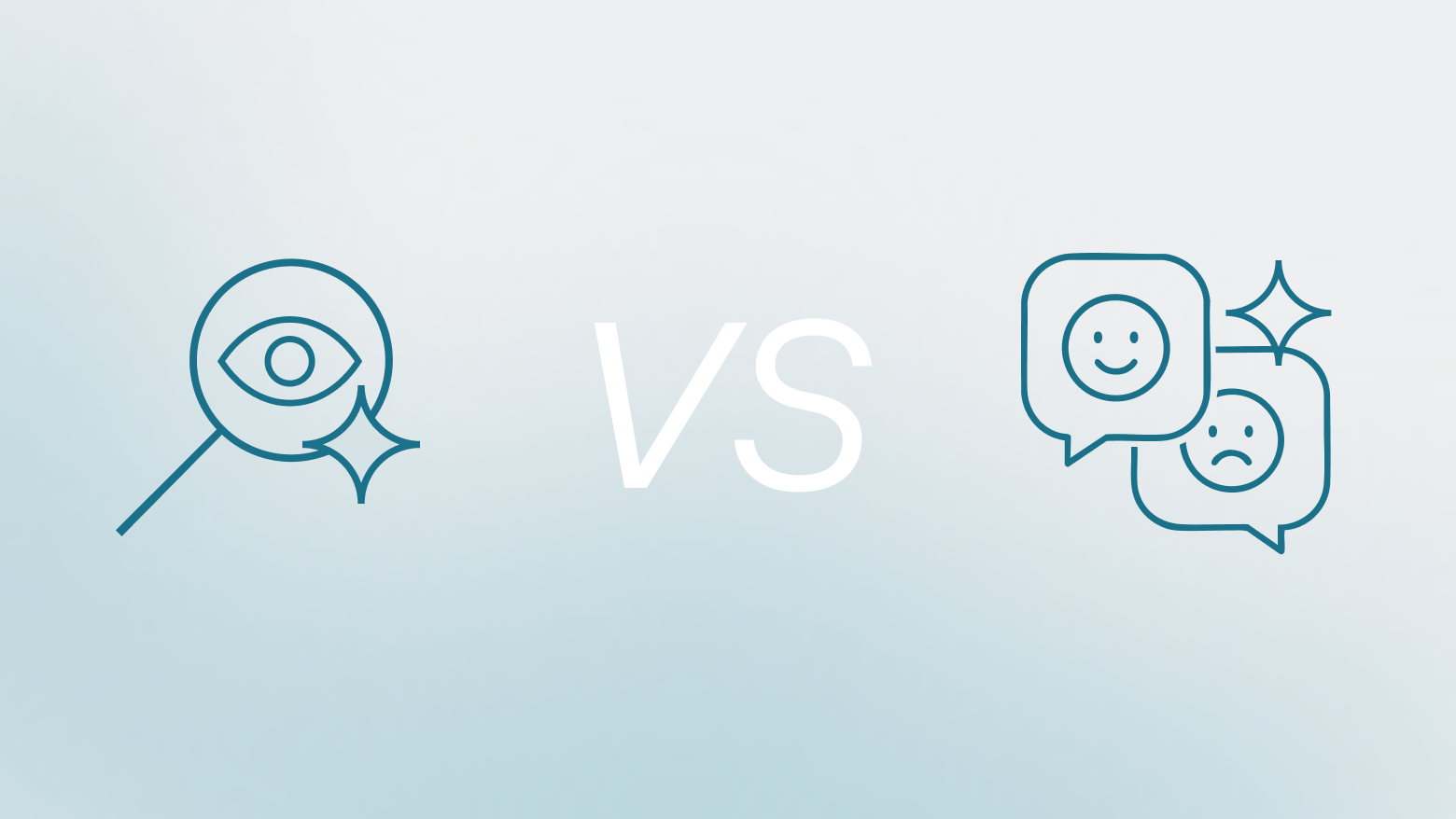
TL;DR: AI visibility is about being found. AI sentiment is about how you're described once found. Marketers must optimize for both to surface in AI-generated results — and to be represented accurately and favorably.
AI Visibility vs. AI Sentiment: Two Metrics that Define Brand Discovery in AI Search
Understand, then align content, SEO, GEO, and brand visibility strategies to reach new customers in AI-driven search.

Yext
Sep 18, 2025
5 min
The basics of AI search strategy
For the first time ever, marketers are losing control of their brand narrative.
Whether we've admitted it or not, we are ceding storytelling to large language models (LLMs) and generative search engines. Every day, more and more customers are moving from experimenting with tools like ChatGPT, Claude, and Perplexity to relying on them as defaults. (In fact, we found that 75% of people are using AI search tools more than they did a year ago, and 43% use them daily or more.)
This shift is forcing marketers to rethink their search playbook and build strategies for the AI era.
To optimize for AI search, marketers need to understand two key concepts:
AI visibility: Does the AI include my brand as an answer (or preferably, The Answer)?
AI sentiment: When my brand surfaces in AI, how is it being described?
What is AI visibility?
AI visibility answers the question, "Does this AI include us and reference us in its answer?"
AI visibility is about presence. It is absolutely something you can control through your owned properties because it's influenced by technical factors like:
Schema markup and structured data in a knowledge graph
Metadata, content accuracy, and completeness
Good ol' Experience, Expertise, Authority, and Trust (EEAT) and content freshness
What is AI sentiment?
AI sentiment asks, "What tone, associations, and reputation does AI pull in when it writes about my brand?"It's all about perception. AI sentiment is shaped by third-party sources: reviews, news coverage, forums, and social signals. It's earned, not owned — and far harder to control. Marketers can still influence sentiment by focusing on:
Frequent and consistent review and rating management
Brand presence and engagement on third-party platforms (media, analyst sites, blogs, forums)
Public relations and monitoring brand mentions in public discourse
Consistently publishing and engaging on social platforms
AI visibility and AI sentiment are equally important to discoverability
Marketers also need to understand that AI visibility and AI sentiment are not an either/or proposition. You need to invest in both to win in AI-driven discovery.
If you focus only on visibility, you might show up — but not in an accurate or flattering way.
If you focus only on sentiment, people may be saying great things about you — but new customers won't see them because you're not visible in the conversation.
How to optimize for AI visibility
AI search has changed your audience. You're no longer writing only for people — you're also writing for machines. To be discoverable, your content must serve both:
For humans: clear, helpful answers to real customer questions
For machines: structured, accurate, and up-to-date data they can parse with confidence
Here's how it's done:
1. Write content that answers real customer questions
Don't just optimize for keywords. Customers in AI platforms ask full, conversational questions — and your content needs to match that style and intent.
Use body copy, FAQs, and supporting pages that cluster around high-intent topics like comparisons, how-tos, and decision support. Direct questions followed by clear answers help both people and machines.
2. Structure data for machines
Make your content consumable by AI systems. Use schema markup thoroughly, without fail. Don't overlook schema communicating FAQs, locations, reviews, or product/service information. AI is looking for schema because it speaks that language.
And centralize it all in a knowledge graph to create a structured source of truth. This helps brands build trust with these AI platforms and increases the odds of being cited in their answers.
3. Prioritize freshness
AI engines heavily weight recency as a trust signal. Keep name, address, phone number (NAP), hours, product data, photographs, videos, rates, team, and bio pages updated across all digital properties. Outdated information isn't just ignored — it can push you out of the answer set.
4. Expand your surface area
Generative models pull from a wide set of sources. Make sure your brand has complete, accurate listings across Google and other publishers relevant for your brand. These platforms feed generative models. (P.S. The broader your publishing network, the better visibility.)
How to optimize for AI sentiment
Here are four ways to influence how your brand is described in AI search results:
1. Manage your reviews
Respond to reviews across platforms quickly and consistently. Customers expect responses in less than a week, and reviews management can increase star rankings and sentiment quickly. Use reviews to surface and repurpose customer testimonials in other strategic channels, including sales enablement.
2. Shape your narrative in third-party content
Build PR relationships with industry publications, influencers, and customers in social channels. Drive and amplify coverage that reinforces your brand position and differentiators.
3. Influence community conversation
Engage in forums and answer questions where your brand or category is being discussed. Positive mentions and active presence on Reddit, Quora, Yelp, Beli, Houzz, etc., influence AI perception.
4. Create reference-worthy content
Publish original research, industry benchmarks, or tools that others can and want to link to. These citations boost SEO — and boost trust among AI platforms and LLMs.
Adapt your search strategy to build trust with AI
AI search doesn't just link to your brand. It amplifies everything that's ever been said, then reshapes it into a story about you.
Every outdated page, every poor review, every data inconsistency — they don't get buried anymore; they're signals that AI uses to define your brand.
So, if you want to have control of your brand narrative in AI search, you must align your visibility and sentiment strategies across SEO, GEO, content, and brand reputation strategies. It's the new cost of staying relevant and favorable in search.