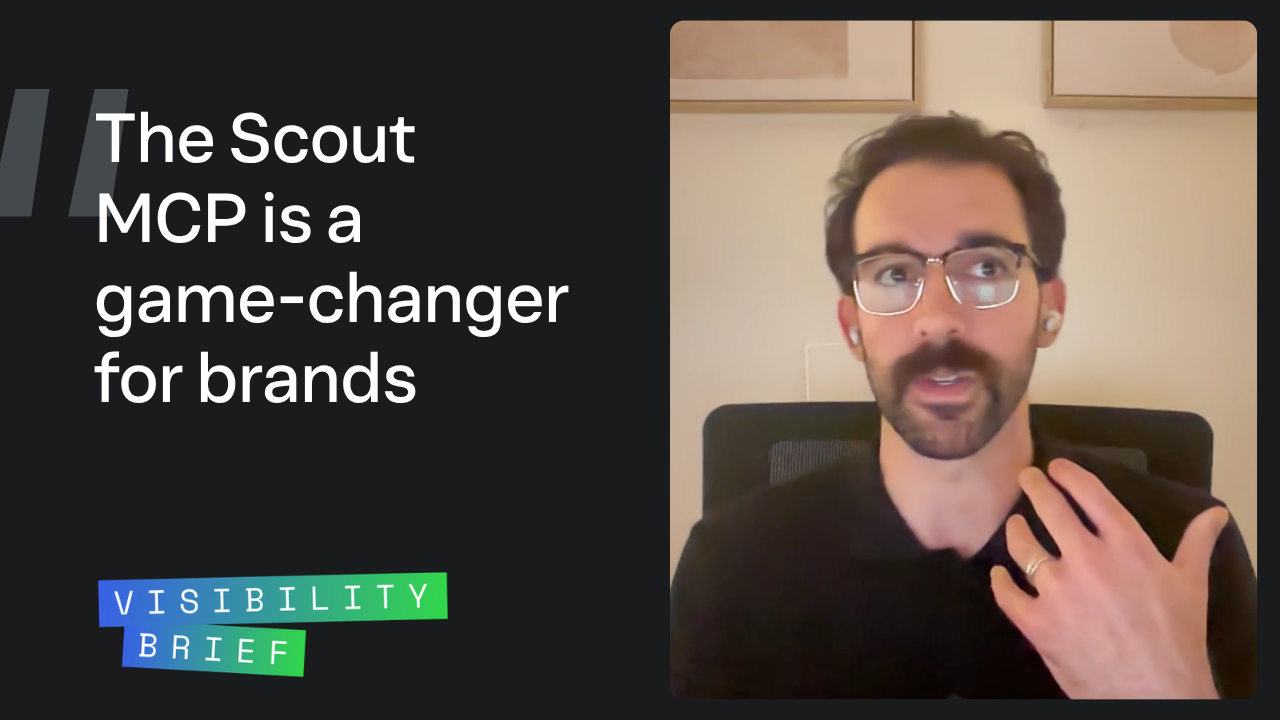
For Wells Fargo, it wasn't a flashy new AI initiative that unlocked better visibility. It was actually a 12-year-old ATM and branch locator.
When the brand's marketing team realized their location pages weren't surfacing consistently in AI search, they saw an opportunity to optimize those pages for both people and LLMs. But what started as a branch locator redesign quickly became a blueprint for how legacy brands can adapt their digital experiences for an AI-first customer journey.
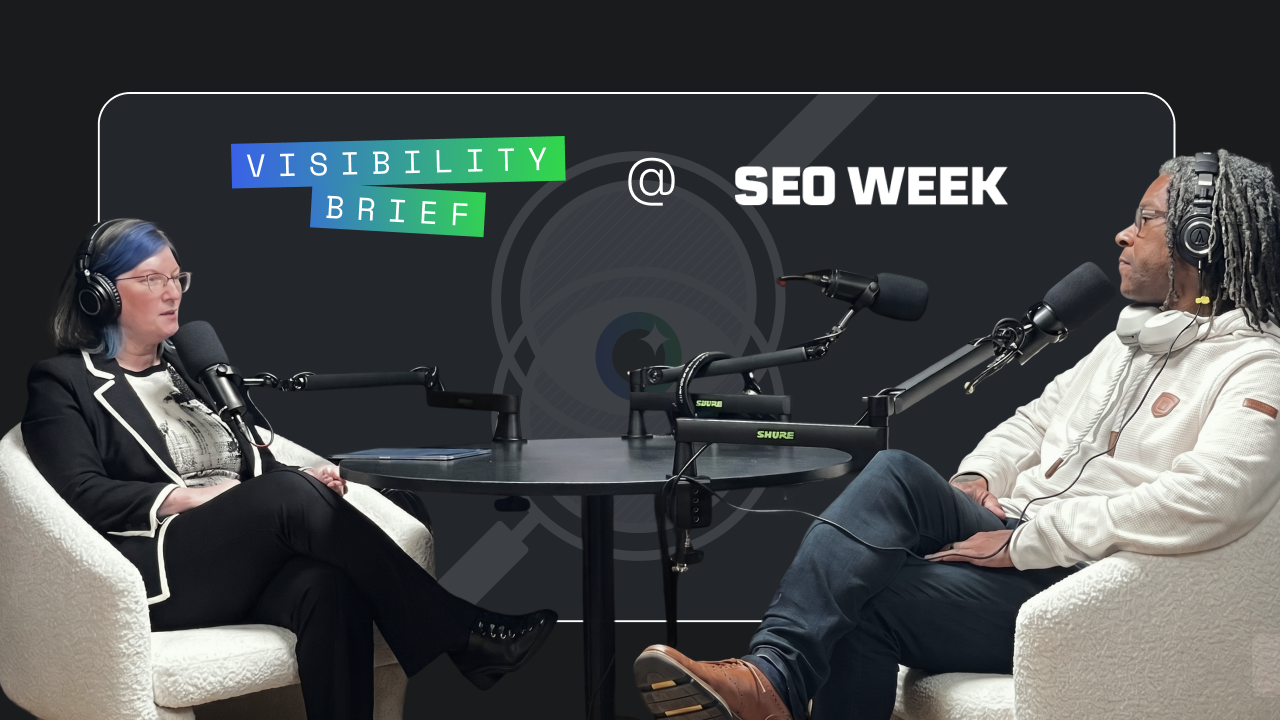
In this episode of The Visibility Brief, Rebecca Colwell (SVP of Marketing, Yext) is joined by Anna Vagnerini (Executive Director Digital Discovery, Wells Fargo) to explore how AI search is forcing brands to rethink some of their oldest digital experiences. Drawing on Wells Fargo's recent branch locator transformation, Anna shares how her team approached structured data, human-centered design, and AI visibility. This can't-miss discussion reveals why sometimes the biggest opportunities are hiding in the experiences brands have overlooked for years.
This episode breaks down:
How to turn a utility into a high-intent customer acquisition channel
Why tried-and-true digital experiences deserve a second look
What "human and machine UX" really means
How to measure success beyond traditional marketing metrics
Why AI visibility starts with consistent, trustworthy data
If you're a marketing leader wondering where to start with AI search, this episode is a reminder that the answer may not be a brand-new initiative. Sometimes the biggest opportunity is taking a fresh look at the digital experiences your customers already rely on.
Episode Links
Transcript
00:00:00.040 — 00:00:26.280 When Wells Fargo discovered that their ATM and branch locator pages were not showing up in AI search, they knew something needed to change. They then partnered with Yext to create their first marketing digital experience, built for both the human and machine experience. And here to tell us all about it is Anna magnani of Wells Fargo, who played a critical role in this key initiative. Let's get into it. 00:00:33.920 — 00:01:35.190 Hi. Thank you for joining us, and welcome to The Visibility Brief. Hey, Rebecca, thank you so much for having me. I'm so excited to be here. So I've been looking forward to this conversation for a long time. Um, you lead the digital discovery arm at Wells Fargo on the marketing, operations and transformation team. Super cool. But before we dig into that, I understand you're also an avid tennis player, a yoga practitioner, and a mom to a four year old little girl. So you have to tell me how. How do you do it all? Um. I have a very, very helpful husband. And I have a wonderful daughter who also likes to do those things, too. So we create space for ourselves, and we create space for us to be able to do things together. And I think that that gives us the ability to focus on work. And when I need to focus on going to do something for myself, when that self-care is necessary. And then I really just love hanging out with my daughter. She makes it easy. So 00:01:36.790 — 00:01:44.310 I'm just picturing a tiny little yoga practitioner. She loves it. She will show you her tree pose any moment. 00:01:45.990 — 00:04:24.359 Amazing. Well, let's dig in on the professional side of it. So tell us a bit more about your role and your mission at Wells Fargo. Yeah, so my roles really evolved over the past year. I started out in a digital Innovation's role within the deposits group. And I was kind of. Focused very much on enhancing Wells Fargo, um, our honest placements. And then I jumped on to this branch locator redesign project. And it started out as an opportunity to just enhance a legacy experience. Um, but it quickly grew into so much more with this explosion, I would say, of digital discovery through LMS. And we saw opportunity to reach our customer in this kind of in-between space that has developed. And, you know, I'm not the only one at Wells Fargo doing it. But within the deposits group, we are really laser focused on making sure that we are visible to the customer. And we are also providing accurate and helpful information where they need it. I've never really thought about AI as an in-between space, but I think it's a really great analogy. So much of banking feels digital, so I'm also curious, like people still go into branch locations and things like that. So how do you think about local presence and digital presence and how those two things work together for your overall client experience? Yeah, they go hand in hand, and I honestly think that even more so as the world does get more digital, that human connection and presence, especially at these high intent moments, which is a customer going into a branch, it's necessary. I think a customer, when they have a problem that needs to be solved right now, they have endless access to information. But when there is something that is a major life decision that requires, I would say, care and empathy of a human, be it a security issue or, you know, buying a house or trying to start a business, you want to be able to talk to somebody. And so we want to make it easy for them to find us, like there was this space that was left with a legacy experience, um, that was not creating so much of a roadblock, but it was creating a visibility problem. Wells Fargo was a we value this vast branch 00:04:25.360 — 00:05:23.390 network that we have all across the country, and so we want to be able to be easily found via LMS or in person for that in-person connection. So that's what a lot of my work has been focused on. I know that this is also a priority for your your CEO. Um, I think he called the branch footprint for Wells Fargo. A key differentiator for the organization. I'm curious. Let's dig in to the project that you've been working on. So you rebuilt the ATM and store locator pages. So before we get into that, let's start with the basics for people that might not be familiar. What exactly is an ATM and store locator and why does it matter to customer experience? It's just this digital, um, experience that allows the customer either on their desktop or on their phone, to find the nearest branch that meets their needs, branch or ATM. And what we had prior to this project was a, 00:05:24.910 — 00:07:54.050 a locator that had been built close to 12 years ago. It functioned. It did. It did the job. It found the branch near you, but that's pretty much it. And so this opportunity came around to, um, turn it from a just a basic utility to an experience that can actually benefit the customer, help answer questions and really provide more information that they either didn't know they were looking for or it would help them make better decisions and help better inform their trip to the branch. So what kind of information are we talking about? Business banking that is available. We offer premier services. There are things like a notary which before getting into this project, I really did not think twice about until, you know, you don't really think about I need a notary until you need one. And so yeah, these are things that are offered within the branch and safe deposit boxes, along with everyday, um, needs of the customer, such as addressing problems with accounts or wanting to open an account that requires this human interaction. So yeah, we wanted to build out a locator that helped the customer have the most seamless journey into the branch as possible. So let's talk about how you did that. My understanding is that you approach this by thinking about it as a new acquisition channel, as opposed to trying to fix the the older tool. Is that right? And it says tell me why you took that approach. Well, um, I'm in marketing, so we are always looking for a new way to reach our customer. And that's kind of where this whole project started as, hey, you know, there is a there's a page that gets a lot of action because customers are looking for a bank or an ATM. How can we better talk to our customer there? Can we offer them offers to open checking accounts that they can do online right within? Like maybe they'll just see it and be like, oh, perfect. That's actually exactly what I was looking for. Um, so it started out as this development of a new marketing channel, and, um, Yext was able to help us pull together a seamless experience that included, um, ad containers that are on mobile and on desktop. And we were able to create this channel that allows us to. 00:07:55.400 — 00:09:55.700 provide direct information to our customer the way they need it, and then also add our marketing where they want it. It's such a high intent moment, it makes perfect sense to be optimizing those things. If I were to go in right now and use the locator to find the closest Wells Fargo, which, by the way, I need to do, because I've got some wedding and graduation gifts I have to pull together. And I'm still a girl who gives cash, so I need to find an ATM. Yes. Yes, please. We're happy to help. Right. What would I find? Um. If I went and searched for a page near me or location near me. So you will find a map that is interactive and able to find your location. And go ahead and pull up the other options around you for what you're looking for. You can filter by ATM if you have another need. You're able to filter by certain services that you could be looking for. and then what UX developed for us was also a full directory. Say you're going out of town to visit a mom and you need to help her with some banking needs there. You're you can plan ahead. You can pull up by state. You can drill all the way down to the city. And on there you can also find a robust and well structured branch information page that has up to date hours. It's you know, if there is an emergency closing, it's notified on the page. So you're hopefully customers aren't wasting their time going to a branch that isn't open to serve their needs. There's information on the page with these developed FAQs that help answer customer questions. And for my role, most importantly, help answer questions for LMS. It all kind of tied together with the structured data and an enhanced page that is working to serve both a customer and an AI experience. 00:09:56.820 — 00:10:22.860 Who do you think of as your primary audience for that page? Is it the human client or increasingly the LLM that's going to that page? It is both. And I think that there's a balance that you can strike there. You don't want to develop an experience that can't be read by machines, because then it won't be surfaced and you won't be visible, and you don't want to develop an experience that is to, 00:10:24.180 — 00:11:01.700 um, that feels like it was developed for a machine because you lose trust. People don't like that. And fair enough. There's a balancing act here. And the way we approached redesigning the branch ATM locator was with this idea around human and machine UX, the way that AI is so, um, prevalent and kind of wrapped up in people's lives these days. You have a billion monthly users for Google Gemini, you have a billion monthly users for ChatGPT. It's already part of the customer journey, and so if you're solving for a 00:11:02.940 — 00:11:18.860 better customer experience, you you will naturally solve for both. You'll make sure everyone's boxes are checked on what they need. What are you thinking about next? The only ideas for what you would want to enhance on your page. 00:11:20.500 — 00:16:13.050 Um, yeah we do. And what this project highlighted is the need for not only data cleanup, but enhancement of that data in order to really, um, fully develop the page to be this incredible, self-serving tool for the customer because there's niche things that customers can be looking for that we can't quite help them filter down to right yet, but we will hope to do that with enhance in our data. How are you thinking about success with your store, your ATM, and store locator pages? We have a lot of different ways of looking at success depending on who's looking at it. Um, there's folks that are looking at this new ad placement and how is this performing? You know, that's that's your traditional marketing, you know, clicks account open. The way I'm looking at the success of the branch and ATM locator is more from an AI lens. And how does this improve our accuracy? How does this improve our visibility within LMS? Because for the longest time, um, our old locator wasn't accurately being surfaced within the LMS. Um, just because it was, it was old and it didn't have, um, you know, simple things like schema markup on it. It was it wasn't being the first, um, point of reference when a customer is asking where is the closest branch to me, it should be our own experience. So to me, it's an improvement within the LMS that shows that the locator is actually, um, what LMS are referencing when we are, when the customer is within their own, um, personal AI looking for a branch or trying to make a, um, a personal banking decision that Wells Fargo is service as an option. There is something really reassuring as a marketer, about feeling like there's a little bit of control we can have over influencing what the LMS says. So if that is a property that you own, that you can maintain and you can trust that it's being surfaced, um, that's a fantastic outcome. I love that. Exactly. Yeah. And, you know, they each they weight things differently. And so to me, the idea of we have a lot of things that are actually within our control. And it just kind of takes, you know, rolling up your sleeves and, um, addressing maybe the mundane looking project like a branch, an ATM locator doesn't hurt my feelings when people are like, oh, interesting. I was like, no, you don't understand how big of a deal this actually was. I was like, you're you're giving a facelift to something that's been around as a basic utility for over a decade. Um, yeah, it it requires, again, being creative and and enhancing what you can. So you picked Yext as your partner for this project? Um, I'd love to understand why. Um, I think Yext, though, was picked because they had already proven for, I would believe, some of our competitors and then other, um, in different industries, what they can really do to take legacy systems and modernize them and make them these kind of living, breathing things that can be continuously enhanced and make a real impact in the customer experience. And, you know, when I joined with the working group here, it was just I'll say that I don't think any project from the the signing of the contract to the delivery at Wells Fargo has ever gone so quickly or smoothly, and I've been on a lot of projects. It felt, um, like the gas was pressed the whole way. It was crazy. It was, but it delivered in a year. And, you know, for a legacy financial group, um, that's pretty big when you're making this level of improvement to our digital spaces. That is incredible. Such high praise. And I will absolutely take that back to internal listing. Please do. I mean, they're just wonderful people. So I really, really love the experience. Oh, wonderful. Well, it's time to pivot into our final section. And this is the stop start rethink section. So marketer to marketer quick advice for your peers. So if we think specifically about brand visibility and sentiment and AI the locator the page problem, what do you think your peers could start doing. Stop doing and rethink. I think I would start 00:16:14.170 — 00:16:15.530 looking at. 00:16:17.730 — 00:17:37.959 Not just redesign, but fully just development. I would start looking at that with the lens of human UX and machine UX. I think it's, you know, we're not putting the genie back in the bottle on this one. A the AI is here. And the way that Google and and ChatGPT and perplexity, the way they're crawling these pages, is just a little bit different. It's different than the SEO, where we're trying to hit them with keywords and improve our rank. Um, we're really trying to provide answers, which is really, um, you know, what the customers are looking for so these things can coexist. Um, you just kind of have to think about it a little differently. I love that recommendation for for things to start to do. What should we stop? I think there's a lot of fear about the rapid change of this marketing landscape, and I think I would stop with the hesitancy. I think it's, um, it's not going to get you far. Being able to be creative in the way you problem solve, um, and the way you use tools and the way you 00:17:39.120 — 00:19:23.900 you look at measurement, to which I know is what's creating a lot of this hesitancy is like, how do we track this? I think there's creative solution to all of that, and don't be hesitant to jump in and try something new is at the end of the day. I mean, you got to try. Yes, yes. You know, I I've been thinking about that a lot too. Like what I look for now when I hire new folks on the team is really a curiosity and a resilience and, you know, a lack of fear. Just go out there and try something new. I remember when social media started to become a big marketing function, and how we were all testing and learning, and it feels like this is, you know, a much bigger version of that. But it's fun to be on the, the, the frontier again of this. I've been using the word frontier a lot, and I think that, um, you know, a frontier is scary. And especially when you're in this kind of well-oiled machine of we have these KPIs. We have, you know, strict measurement that we try to stick to, um, and in order to prove success. And I think that this is this is that moment where, you know, you don't. Don't get rid of those old KPIs, but embrace a different way of looking at what success actually is in this new landscape. Well, Anna, this has been an amazing conversation and I learned so much. How can people find you or follow you to stay on top of your thought leadership or what you're doing? I guess the best is on LinkedIn. Um. Oh, my name Anna Wagner. I work at Wells Fargo. Um, everything else is private and not fun unless people want to see pictures from our trip to Disney. It was great. 00:19:25.780 — 00:19:44.900 It does sound really fun. Well, thank you so, so much for joining us on The Visibility Brief. Really appreciate it. Thank you. I really appreciate the time. That's a wrap on this episode of The Visibility Brief. If you found this useful, subscribe, leave us a review or send us to a colleague who needs to hear it. We'll see you next time.