People don't choose a financial advisor based on a single ad, search, or recommendation. Instead, they look at an advisor's background, check their local reviews, and, increasingly, use search and AI to decide who they can truly trust.
For First Command — where 78% of digital leads have search as their last marketing touchpoint — showing up was only part of the equation.
But Scott Speidel and his team discovered something else: paid and organic marketing become much more powerful when they work together. By combining local pages, reviews, social engagement, and paid media, First Command was able to nearly double their conversion rates.
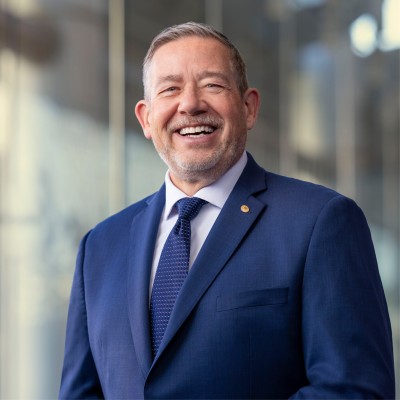
In this episode of The Visibility Brief, Rebecca Colwell (SVP of Marketing, Yext) sits down with Scott Spidell (SVP of Brand and Strategic Marketing, First Command) to discuss the strategy behind those results.
During their conversation, Scott shares how First Command built a repeatable formula for improving local visibility, the trust signals that help individual advisors stand out, and why marketers should stop treating paid and organic as separate strategies.
This episode breaks down:
How to identify the local signals that can turn visibility into stronger conversion
Why reviews, local pages, and social engagement became the foundation of its strategy
What trust signals to include on local pages to help customers feel confident choosing your brand
Why paid media works harder when the right organic foundation is already in place
What marketers with distributed teams, locations, or representatives can do to improve visibility at the local level
If you're a marketing leader managing locations, advisors, agents, or other local representatives, this episode offers a real-world look at what happens when paid media, local content, reputation, and social work together — and the measurable impact that can have on visibility and conversion.
Episode Links
Transcript
00:00:00.120 — 00:00:34.480 Military families are constantly navigating change from relocations to deployments, and in those moments, they need a financial advisor they can trust, and they're increasingly turning to AI for support. Our guest today has cracked the code on how to help his financial advisors double their visibility in AI search through a combination of paid and organic marketing strategies. I am so excited to welcome Scott Speidel, Senior Vice President of Brand and Strategic Marketing at First Command, to unpack exactly what he did to do that. Let's get into it. 00:00:42.240 — 00:15:25.810 Hi, Scott. Welcome to the Visibility Breed. Oh, thanks so much for having me, I appreciate it. I'm really excited for our conversation today. Um, the mission behind First Command is a really, really interesting one, and I'm excited to dive in. But let's start with your background. So you've spent much of your career in financial services marketing, but you also clearly have a passion for military families. So tell me a bit about your role and what brought you there. You know, as as most careers, you kind of take a zig zag path, uh, into where you're going. But the lion's share of my career has really been focused in the military or not military space, but in the financial space and, uh, working for companies like Transamerica, FIS, countrywide long ago. Interestingly, my career really started as a police officer. Uh, back in the late 80s, early 90s. And that's where I really picked up a passion for serving others. And I think that's carried through my career. Overall, when you look at first command, their overarching mission is really coaching those who serve in their pursuit of financial security. The company, three out of four of our financial advisors in the field or at Home Office have a military background. Either a military spouse, were active military and now retired or had left military for a second career. And it really plays well when you think about our specific market because it it ties directly giving back. They've walked in the same boots, so to speak. If your coin kind of a military term. Tell me a little bit about your role leading marketing. Mine, when I started with the company, was really the one of the first hires of the CMO that was starting with the company at that time was to found a marketing strategy. So a lot of my focus is brand reputation management and go to market brand strategy and really help define how do we reach not only a larger audience of just building a brand awareness, which is always a challenge for a company? It ties us spending. It ties to a lot of different things around advertising. But how do you cultivate local markets? How do you cultivate reputation to work in your towards your advantage? How do you build that reputation that shows up in search in other areas. You know that people are looking for you at that right time, at that right moment. And so a lot of my focus is built around strategy development that really ties into that. But you have a fascinating, um, story that I'm excited to dig into later about how you double the visibility of your advisors. Um, but before we dig into that, I want to explore the space that you're in a little bit, because financial services is really competitive, and you have a very interesting, unique audience that you serve. So, um, tell me a little bit about what's different about the lives of the military families that you serve versus a civilian who might be looking for financial services. Military lives are so uniquely different. And if you have family members that are military or you served yourself, you you kind of know that the life changing events that happen constantly through their life Deployment. Picking, which is really moving to a new duty station, can happen at any given moment. For for a military family. So you think about, you know, you as a civilian, if you're if you're moving for a job or you're having a life event, like a baby is born in your family, one of those kind of key life moments, you have a support mechanism around you. For military families, their their network is the people on base, the the relationships they build. But those can be abruptly changed by a relocation to a new base or deployment of their, of their active military spouse. So you think about how do you how do you anchor your financial life inside of that when things are abruptly changing all the time? You mentioned that three out of four of the first Command Advisors have military experience. That's themselves, and I imagine that is so meaningful because they understand the shared experience you were just talking about. Walk me through why that matters so much to your clients. Well, if you if you think about financial services in general, just just anchoring a relationship with someone is difficult enough. You know, building that trust that you would need to need to have to them to trust you as their financial advisor or their coach and service. If you think about military audience, the life that we were talking about of them pieces and or moving to a New Guinea station, them being deployed, all these different points of change that a normal civilian wouldn't have. If you don't have that experience in your own life, our advisors having that experience, it's really hard to talk that lingo, you know, to to if walking your boots. I understand that these changes are happening. I've lived through those experiences, and I think what really sets us apart is that our advisors have that experience. They've been through that at different levels of the military. They've ranked up just like they have. They've experienced the moves and, and, and the issues that, you know, are a prolifera around those things that happen in their families. And that perspective can really build trust and value. It's almost like an like, oh, they were in the Army. I was in the Army, I connect. So let's, uh, start at the beginning of what happens when a military family realizes they need financial help. So where do they typically go, uh, to find someone they trust? I mean, are you seeing AI is starting to impact that journey? Obviously, we've seen a lot of change over time, AI being the most recent of that. And, uh, truly knowing the demographic of our particular audience in the military, it's really both AI and search that drive that initial behavior of of search. I think all of us have been changed by how the internet, how search and AI affect how we treat and look for brands. And, you know, it starts at a local level. Um, a lot of times you think about how you search yourself. You're looking for, you know, as, as something like a plumber or someone to fix your dryer or whatever that happens to be. It's searching that local, that local market, even if they're a referral, like someone's worked with that company, you're still researching them to find out what other third party people think of them. And I think that has changed the whole dynamic of of how people find in research brands today. And for us, it's it's from it's formulaic, but it's also a lot of discovery and theory about how can you approach the market differently. Uh, for us, you know, 78% of our digital leads coming in come out of search. The last touch attribution of marketing is search related thought. In our discovery conversations, you shared something that absolutely not my socks off and that was you found a formula to double the visibility of your advisors through a combination of paid media and organic strategies. I would love to dig in to how you did that. But first, let's start with, um, the impetus for the program. What were you trying to solve? It's interesting. You know, when I first started with the company, we were 1 in 10 people knowing our brand overall in, in our particular military market space. So we used a number of different tools and survey based tools to identify brand strength and value. You know, at the time, almost now, nine years ago, when I started with First Command, uh, we were 1 in 10 in that value. That's that's a low bar to to, you know, to hit because you're, you're trying to overcome that. The question that an adviser would get is whose first commands? So the first effort that we did was really layer a national awareness space program around First Command, trying to get over that hurdle of who is first command, what do they do and what audience do they serve. And so we effectively started advertising at a high level, really with strong, what I would call hero based content. Talking about our story, talking about our founding, what our mission is and what we do. When you talk about improving the effectiveness of your paid media, you also talk about ensuring that each of your advisors as visible organically, and you cracked the code on what it takes to drive that organic visibility. So can you walk me through the factors that you discovered that are driving higher organic visibility? You're thinking about someone finding you, searching the eye. Become the most prominent values of connecting the dots so they can build trust around that advisor in the company as a whole. And what we found was the three key ingredients at the local level was reviews. So Google my business reviews, and it came down to almost a mathematical equation. It had to be at least five GMB reviews, um, per uh, as kind of a starter or foundation, and then a trickle of those 1 to 2 a month at least, that refreshed that data. So they were current, uh, evaluated by the individual. The second thing, uh, truly was local page pages. So our UX based pages that we use through your network, that data that they put into it cannot be boilerplate. You have to we we constructed with with actually x's help constructed a formula around how we structured our pages to include that GMB review at the top, as well as active reviews being shown in the body of the page. A very concise but telling bio around their history if they're an advisor. They went to West Point and they were had a long military career. Those connections in that SEO value driven out of that page is immense. But when a person reads that after seeing wow, they have a four and a half or a five star rating over all these clients that that believe in them, they're connected at a military level with me. Now, I read those reviews and then layer on testimonials from clients, longtime clients. That formula becomes very positive, but it's only two key elements that we found that really drove it. The third was social engagement. And because we used the X platform and what what I think was called hearsay, but I always reference it. I'm an old school, so I call it hearsay. But that connection was the third ingredient that really triggered in our mind. And we see it in the stats, the algorithm of localized search. and they had to maintain at least a 35 to 40 on their, um, score, which is usually a user maturity model. So it really gave us an anchoring point to go. If we look at an advisor in a local market, they're actively using social above that point, which means they're engaged. If they're hitting a 40, they are highly engaged in social, they're doing organic content, they're using corporate based content. They're using the levers that they they need to through Facebook, LinkedIn and so on. And so and that is a whole story in itself, how we engage in social, how we activate our advisors in that space and educate them. But when you hit all three of those elements, we saw huge numeric change in our our values locally. And then you layered on that media program. On top of that, the media program is really the ingredient that ups the ante in in visibility. Okay. So you crack the code. You found that, uh, actively managing your reputation, having very customized local pages and then being very active on social and then layering the media on top of that was the formula for success. Tell me about the numbers. What what was the impact, what we were finding. As with paid media engagement, we were seeing almost a 58% increase in our engagement values measured through UX platform on page engagement alone. So, you know, if you think about some of the growth, like brand searches, uh, in everything else that was tied into that was growing at a, at a huge rate for us when we had the combination of all those values tied together. And so the difference one of the differences that we measure, obviously, is digital digital intake funnels are people coming into our, our in, you know, in through additional means filling out a form about who they are. They want to engage with an advisor and kind of that delineating, uh, lead funnel that you would have coming into our CRM package. And we were seeing a conversion rate move up to from 3.3 for most of our advisor force, for those advisors in those regions that, on average, were going at 6.6% conversion rate of getting a lead in the door and having them sit down and talk. That's huge. Um, huge values over national averages. But just you're building trust, you're building and understanding of who the brand is before they even walk in the door. That that piece of it was a huge game changer in how we started evaluating local market in the organic and media value together. And we found that, like I said, coupling them together, um, created a really unique environment that could drive engagement beyond, um, I wouldn't say our wildest dreams, but it's moving towards that, you know? I knew it. So your program virtually doubled the visibility and doubled conversion of the leads. Is that. Is that right? Pretty incredible. Um, if you think about our advisor force today, the 12 district areas and advisors that work in them, they receive 27% on average of our of our intake leads coming through digital means, whether that's personal outreach based on a digital page. And they found found you on Google. They're coming through our digital funnel. However that structure is 2012. Districts make up 20% 27% of our traffic into the company to become clients. That's that's a pretty amazing value. And it tells me expand the program, you know. Of course. 00:15:26.970 — 00:16:40.030 Absolutely. Um, so how are you taking this out to the field? You know, I did a lot of travel over the last few years meeting with these districts, teaching them the value of their digital desktop, basically their, you know, being digitally enabled. And I you can't discount the value of local engagement as well. So, you know, brand, I find that brand takes 7 or 8 touches along the way to be visible to to an, to a to a, a customer or a prospect that before they recognize that brand, before the recall kicks in and goes, wow, I've seen first command. I've heard good things about them. It's that that additive what we're trying to do is, is make that additive shorter. Scott, one of the things that I love so much about the program is that when you talk about reviews, pages, and social, these are not things that you're managing in isolation in different systems. You've got it all in one platform. And so I'm curious how you think about that and how impactful that has been in your ability to to create and scale this program. Well, it's interesting if you if you think about 00:16:41.350 — 00:31:36.069 running and I know probably many other marketers, but either hear this or, you know, feel the pain of it normally is that you're running disparate programs or different applications to manage Google my business reviews, social media, all these different things. And that's seeing the data reporting back in a singular dashboard or being able to manage that through automation, uh, some AI based tools and others. There's no, uh, it makes it very inefficient to run those kind of programs and see the holistic picture of how you're reaching, how you're engaging your audiences differently. And for us, I mean, the Yext equation to that was that we were able to see that we were able to tie not only our social media, but the ability to see our Google reviews in live action, repost replies to those, and we manage that corporately for all of our field advisors to really lift the weight of managing GMB, but also to give a consistent branding message towards that and being able to, you know, work on their advisor pages on their behalf, help guide them through a lot of that. Making sure the information is accurate in one location is truly a game changer from our perspective, because we're lean group like most marketing companies, you know, marketing groups, you run lean, uh, you know, you're trying to make every dollar count towards your engagement in the value of the brand. And it made a huge difference for us and continues to do that as our partnership grows and grows. Um, have you found that having everything in one system improves adoption and compliance with the program? Definitely. So I think, you know, we obviously we're highly regulated as a financial company, both both as financial advisory services, but as a bank. So you have Regulatory, you know, compression happening all the time around our company. It became so much easier to have singular ized reporting, the ability to have that complaint review process in the engage through the whole throughput of of their whether it's their advisor pages, their social media or their GMB reviews, those levers now have automation to them that really help drive engagement at scale. And I think scale is the important aspect of this. When we started with with Yext, it was really, you know, how do we solve for simple things like how do we manage our advisor pages and make, you know, make a templated approach to drive them? But then with social media, the advent of social media and all the content around that, how do you keep that all compliant in 1 in 1 location and make that process smooth for the advisors, because you don't want to hold the post for two days or three days, or even 24 hours, it's how do you automate that reviewing process to make sure that you're compliant. For one thing, you're not giving. You know, you're not saying free or any of those kind of words that that would really, you know, trip so many of us up. But it's really about how do we how do we coach those who serve in our case, but keep a compliant nature around what we drive, but also give that personalization that an advisor needs in that local market to talk to his audience or her audience at the right time, at the right place. Tell me more about the social media content your advisors are creating. Um, that is is working. What's having an impact? I'll talk in general. And around then our flagship program specifically and corporately, we drive content. We have we have a content library managed through the X platform where we drive local, engage, you know, um, more corporate based content around changes in military life. Or it could be financial topics. Interesting topic we just put out there was tied around gambling in the military. A really interesting topic in really systemic to military, where there's this thought that that's kind of an investment, you know, is, is is betting and winning an investable opportunity. And it's it's it's not don't do it. You'll never win. But but that kind of mentality was pervasive in the military, uh, that we were finding through data. And so it's in those moment type of articles where you can help guide direction that carries over into channels like social media that the advisors can use if they're seeing that in their community. How can I how can I engage that right content at the right time through channels that they're going to be receptive in? And so that was really important. And then also to give them tools, you know, through social media where they could add their own touch to the media content, whether it was, you know, a unique post content or kind of leveraging it a little differently for their local engagement in their local audiences is truly, truly a differentiator. But we try to give that content in value, and then we also post corporately to that client base on a more national level. But really, what the game changer for us was, is helping the advisors understand the value of organic, unique content that they develop. They provided image. They provide context around that in the platform. You know, through hearsay really allowed us to get to that level where they could develop their content. It has a lexicon of of kind, you know, of kind of post checking, making sure that it's already compliant. And then a human factor within that is having, having, you know, a 24 license. 24 advise you know, a compliant individual. Look at that information and validate that it's good to go. And that happens in less than hours in many cases in minutes in many cases. So that cycle of change and the ability for an advisor to post a relevant post at the right time becomes so powerful. And that is that is, you know, I think I've used game Changer a lot in here, but but that is a differentiator for our field. I would like to dig in a little bit more around the local pages that you've created for each advisor. So they have a very high conversion rate. And I'm really curious what kind of trust signals you have on that page that you think are resonating so much with, with your potential client? Yeah, I'd love to talk about that. It you know, to me, that's the anchor point. Not in a sentence. The advisor pages. It's actually the, um, the local, what we call local city pages. So it's that community, um, wrapped around an office or multiple offices within a district. But those individual pages, I think, resonate so well because we really worked with the team in crafting this layered. You know, I talked about layer Cake at a media level. It's it's kind of the same principle on the page. The, you know, we put the GM based star review at the very top. We talk about their credentials as a financial advisor. We give a robust bio that really talks about them personally all the way down to, you know, I love dogs or I, you know, I, I go out in the community and run. It's those little things that trigger SEO value inside, you know, inside of their bio. And it was interesting in talking with those advisors, they didn't realize that a little bit of my history can go a long way into connecting the dots with some of them before they even talk to you. And once it resonated with them that, well, my picture or my military Background or my affinity or hobbies make a difference in SEO. It was it was like a light bulb that went on and wow, I'm going to make my bio more robust. And we actually go through a pretty unique process for bio development. Um, that it's, it's, um, automated through our compliant, uh, compliant platform. And we actually they can craft their bios completely with kind of drop downs and fill in the blank kind of messaging to really craft a unique story. And that's worked well for us. Um, we are pivoting into our final section, which is, um, advice for your fellow marketers. So you've run this incredibly coordinated program and crack the code on how to double organic visibility for your advisors. And I'd love to to have you share some tips. So what is something that you would recommend your peers start doing today? Concentrate your investments at the local level. Uh, it's hard when you've got, uh, competing companies looking for that same audience at the same time with similar services. Differentiators become that local. That local advisor page with the history of who they are and what they are to engage trust. It's the GMB reviews that organic aspect. But then use use your media program and media dollars to amplify those messages. To drive that home. I would say invest in your local markets. Look. Look at AI results around those local local engagement. Ex has an amazing tool scout for looking at those local engagement values around visibility against not only yourself, but your peers or other competing companies in your space. Those that information is imperative. That kind of reporting will give you insight of how to tweak your marketing program and deliver at the local level, and I wouldn't say never turn up. Don't turn off always on branding. You've got to have that as a foundational piece. Okay, Scott, and what would you recommend that they stop doing? Don't treat organic differently than your paid media programs. They are not separate. They work in tandem together. You have to engage that. I mean, I look at the numbers of what we see when we do it right at the local level of doing that media program linked directly to the organic content and value we're building locally. And I mean, it takes a paradigm shift of teaching your advisors how to really think differently around digital digital. But the difference is huge. I mean, if you think about I'd given some earlier stats, but when I think about impressions going up, you know, up to 58% more value driving at our local level, because we're engaging both at the media level and the local organic. The numbers tell you you're going in the right direction. Finally, what would you recommend that marketers rethink in this environment? Last. Last but not least is, is rethink visibility. I think you have to own it as as a marketer to help educate and make that granular changes in behavior around engaging locally, using organic media to your advantage for your advisor force if you're in that space, or even if you're in the consumer market where you have local, you know, local franchises, it's the same thing. It you utilizing that local brick and mortar, utilizing that local engagement socially has a huge value. And for our advisors, it was it was really just don't give up on what you're doing. You're doing great. Make an additive of digital to be a part of your quiver and how you deliver on on your brand, because you're not. You're not just an. You're an individual brand and yourself an individual person. But you're helping drive the visibility of the corporate enterprises, while at the same time people don't look at a brand and go, you know, first command is that single advisor. So first command is the holistic value and trust around the whole company. How do you how do you brand that forward at the local level, the national level and so on? Scott, this is such great, great guidance for your peers. Before you wrap today. I wanted to touch on one more thing that I know is really important to you and the entire team at First Command, and that is your philanthropic efforts and how you're giving back to the community. So tell us a little bit more about your force for good program. You know that that is a, uh, a passion of mine. It's giving back to local community and national based community. But it was interesting. Many companies have great social, social giving Programs there socially conscious and giving back to their local community. But how do you change the value of of philanthropic efforts of a company to become a mantelpiece for the brand to really go? We do it differently. And so it started as a square in that tapestry of kind of napkin, you know, math going white. Our company gives back a lot to our community, and we were scaling it around 9% of our of overall gross revenue and in-kind giving back to our community. Well, we're in Esop based company. We don't get a tax break or value against that giving. It's just the nature of the company to give back to our military audience, which is one of the things that endeared me to stay here and hopefully retire with a company, you know, going forward, is that that mission aligned with my own personal values of giving back to the community, and how do we how do we take that now, this corporate responsibility of giving back and amplify it to make it part of our brand? And that was what hatched into force for good and force for good became really it's it's kind of a mantra within the company, a rallying around in for our field, around giving corporately back. So as I said, we we over overall give up to about 9% of our corporate profit value back into our community. It's huge. But what that turned into was we have a little over 700 plus employees at our home office in Fort Worth. We were giving now over 30,000 plus hours of volunteerism back to our local charity and communities, as well as to our military audiences within military service, relief organizations and others. We've raised well over $1 million plus over the last five years, and in some companies that give a big check, We're we're not giving just a big check. We're trying to give back our time. Our value into it. Well, God. Um, how can people connect with you to chat more about some of these ideas? Please feel free to connect me on LinkedIn. I'm very findable. Um, I don't know if you'll post the address, but I can. I can definitely give that if you need it. It's, uh, LinkedIn, uh, LinkedIn.com 00:31:37.110 — 00:32:09.470 in slash SLSSTELL and they can reach me via that. Boy, I will geek out with you all day long. And analytics and marketing and marketing strategy. And definitely philanthropic aspects of the company. Um, all high passion things for me. Incredible. Well, Scott, this was a wonderful, wonderful conversation. I'm so impressed by the results that you have driven. Um, but even more so around your passion for the company and the incredible culture that you're operating within. So, um, 00:32:10.780 — 00:32:53.260 You're very welcome. And thanks to Yext, really for the opportunity to talk about all these these initiatives that we're moving through, how we're evolving as a company, and where we've seen some really good traction around the incorporation of both media and organic approaches for our advisory force. But really, for your partnership to Yext has been a key element helping us drive engagement both locally and nationally, not only through our advisor pages, but through listings, through the reporting data that we see coming back from you. That's how we can pivot quickly. And that's that's a huge value added to any company if they can pivot quickly with small staff. 00:32:54.340 — 00:33:09.140 Thank you so much for that. Have a wonderful day. Yeah. Thank you I appreciate it. That's a wrap on this episode of The Visibility Brief. If you found this useful, subscribe, leave us a review or send this to a colleague who needs to hear it. We'll see you next time.