With over 1,500 independently-owned hearing clinics across the United States, Beltone knows that no two markets look exactly alike. A brand's competitor in one city might not even exist in another, and a tactic driving results for one location could be a waste of resources somewhere else.
National performance metrics can show how the brand is performing overall, but they can hide which locations are winning and losing.
So, how do you help local owners make better marketing decisions without overwhelming them with yet another dashboard?
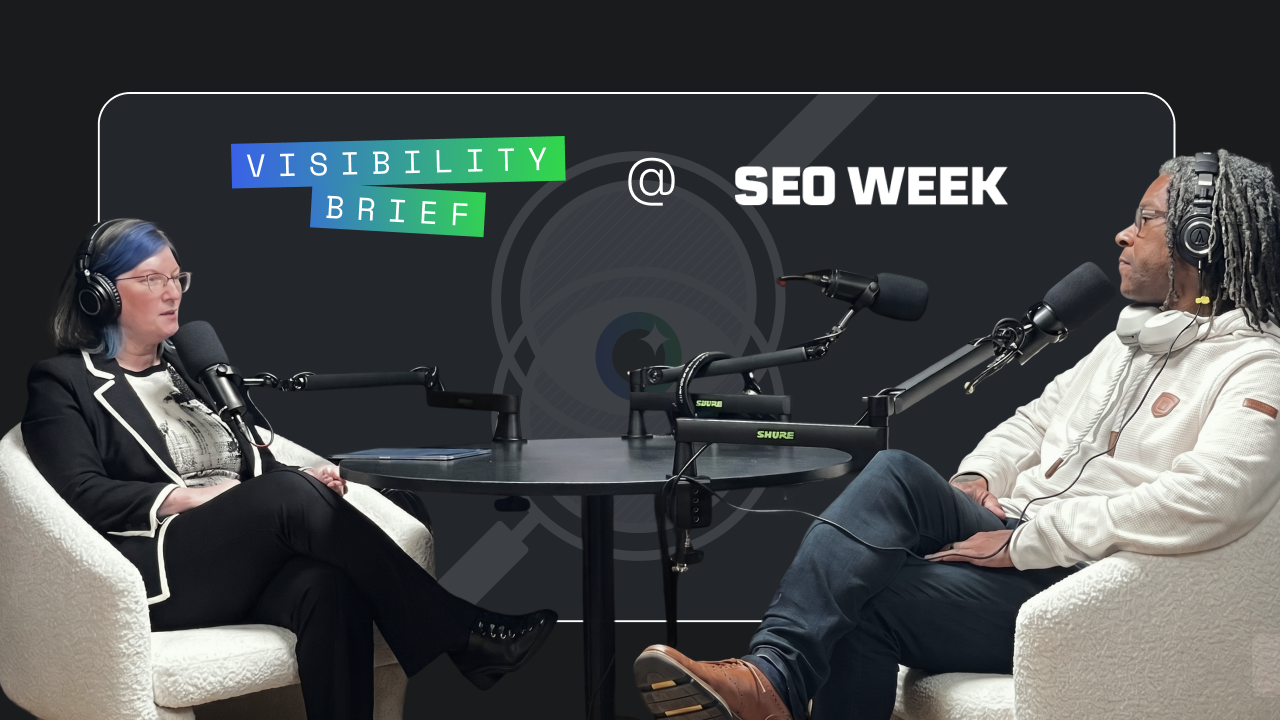
In this episode of The Visibility Brief, Rebecca Colwell (SVP of Marketing, Yext) sits down with Michael McCann (Senior Director of Marketing, Beltone) and Leonard Sullivan (Digital Marketing Manager, Beltone) to discuss what it takes to help a national brand compete — and win — market by market.
Michael and Leonard share how Beltone used Yext Scout to understand local competitive performance, identify opportunities location by location, and turn that data into a plan owners can easily follow.
This episode breaks down:
Why your biggest competitor depends on where you are
How local data can reveal what averages miss
Why the same marketing strategy won't work in every market
What drives local visibility beyond reviews
Why AI search makes your entire digital presence matter
If you're a marketing leader responsible for local performance, this episode will help you move beyond one-size-fits-all strategies and use data to make better decisions market by market.
Episode Links
Transcript
00:00:00.080 — 00:00:35.040 Every local business has competition and we all want to win, but to do so, we need to know exactly who we're competing against and what it takes to win in that local market. Beltone did exactly that by giving their owners a clear picture of where they stand against the competition, what they need to improve, and the support to take the needed action. In the end, the result wasn't just better brand visibility. It was a stronger partnership between corporate marketing and local owners, and in the end, they turned competitive intelligence into competitive competence. Let's get into the episode. 00:00:43.000 — 00:02:03.550 We have an extra special episode of The Visibility Brief today because we have two amazing guests joining us from Beltone. The first is Michael McCann, Senior Director of Marketing. Welcome. Thank you very much. Happy to be here. And we have Leonard Sullivan, who is the digital marketing manager. Welcome. Thank you for having us. One of the things I really enjoyed about our prep session is that the dynamic between the two of you is really impressive, so I wanted to put you on the spot a little bit. What is something that you think your peer brings to the table that makes your partnership work so well? I think one of the things I've really always appreciated about Leonard is he has this amazing analytical mind, but it's coupled with this, this great curiosity. Um, you know, he always wants to understand kind of what data is telling us. I think that's super important. We're dealing with, you know, with practitioners, our owners who don't necessarily understand the the technology behind a lot of these things. They just understand what the advantages can be to their business. So I'd say, you know, I'm probably more on the strategy side. And Leonard is really good at translating this strategy Into execution. And I think that's why we work well together. 00:02:04.590 — 00:09:29.739 That's a hard act to follow. What do you think, Leonard? I mean, I couldn't agree more. You know, uh, Michael really excels at translating the vision of all of our associated teams down to the individual level in a way that makes it easy for you to act on it in order for the whole team to add their own individual parts. And so, you know, you get really embroiled in your own world. But Michael is just an incredible leader when it comes to translating that to the bigger company vision. Well, let's dive into your organization. So, uh, tell us a little bit more about Beltone for our listeners who might not be familiar with the brand. So Beltone has been in business helping people hear better for over 85 years. Um, started out as a family owned business. We are now a part of the G.N. family of brands. Jen is based in Denmark or parent company. Um, I think what really differentiates the brand in this category. Um, it's not just the technology that we provide in the devices that we sell, and the technology is superior. There's no question about that. But I think it's really the relationships that our owners have really built in their communities. I think if you just read some of the clinic's reviews online, you'll see this really consistent pattern of patients describing superior service and, you know, a level of connection with practitioners we have. And some people don't know this, but, uh, and independently, all of our locations are independently owned. We have about 1500 across North America. We sell Beltone products exclusively. Um, it's not like we have a selection of products from different manufacturers. It's all of our own manufactured products. We sell them exclusively in this this network. Um, and we, you know, we every office serves a services, a different communities, different competitors, different opportunities, and we're here just to help their businesses grow. You're so invested in helping your owners succeed. So in terms of your role in marketing, how do you think about your responsibility in helping them be successful? Sure. Yeah, I think a lot of our focus comes down to what can we do on their behalf to best support them in, in a way that allows them to free up their time so they can do what they do best, which is provide hearing care service at the corporate level. Everything is really focused on that, whether that's, you know, improving the website, corporate marketing, systems, listings, reviews, regional marketing managers, helping individual owners with individual location success. It's all about ensuring that the owner has the tools in their arsenal so that they can be successful and dominate their market. Really, everything is focused on that. Tell me about the competitive market that you're in. Does does every market look the same or do you have a competitive picture that is changing location to location. It varies significantly from market to market in what you see from region to region, area to area, city to city. It's highly varied, you know, so we of course we have like the national competitors that we pay attention to at the broader network scale. But then when we get down to certain dispenser groups and local owners, they are like businesses within businesses because many of them have 20, 50, up to 100 locations and they will look at a region or their market competitively different than we look at it at the national market, you know, and that's that's where some of the tools that we can talk about today have been very valuable. You are an early adopter of UX new tool, uh, which is scout our our brand visibility and competitive intelligence tool. So I'm really curious if ever we dive into it. Uh, what motivated you to to look at the tool and look for a better way to understand the competition at the local level? It was also, satisfying a real need that we had at the time because, you know, just like everyone else. Um, we experienced that really significant drop in website traffic and, you know, and it was one of those things where we knew what the reason was. But the problem was we couldn't answer the question, you know, for our, our owners as well, you know, where did that traffic go? And if it went to AI search, how are we doing an AI search? And no one really had a solution or had anything to give us those sort of insights. And so when Jax brought that to us, it was like, this is phenomenal. I mean, it it really solved a problem for us. That's great. I mean, when I think about a drop, a decline in traffic, it's a little more palatable if you know that everybody has experienced the same decline. But if it's just you, then they're going to the competitors. Yeah, that's a big it's a big difference. And I'm really curious. Um, when you got your hands on Scout, one of the things that makes it so different is the ability to drill down to the local level and see the insights at the location level. Has this capability helped your, um, your owners find interesting insights at the local level that, uh, very much so. Um, I'd say that's been probably the most powerful portion of the tool is when we get when we have the ability to sit down with an owner and then kind of zoom in from the national level and look at that one city, that one locality versus their local pack, they're who they're actually competing against. And so we'll sit down with them. We'll ask them, does this represent who you consider your competitors. And they can see that. But now they can see a visibility level they never had the ability to see before in review generation, all sorts of different metrics frequency. So we have this ability to to look at our locations. But we can dive a step deeper than that. We can get an idea of what training is like at the location, what the front desk experience is like at the location, what the actual patient experience at the door is like at the location, based on a combination of the metrics that we look at. So from our team supporting the owners to the owner and their team on the ground, we've been able to look at locations and see ones that are high performing. Pick those out of the pack. Ask them, is there something unique about this location? And it's almost to a dot that they can tell us that that is a person in the business that's making a difference, and it's reflecting these metrics, but the strategy level, then we can take that and we can say what makes that experience unique at that location. We can model that and we can replicate that now. And yeah, we've been able to show them that through data in a way that they hadn't had visibility to before. They knew they had great people on their team, but we could show them, these people are really great. You know, kudos to you to Yext because they have been so responsive. They asked us to jump in in the beta phase, but we've provided a, you know, a decent amount of feedback, um, being in the tool. And you know what? Made sense for our business. And Jax has been so incredibly responsive. And so, you know, I think from where where it started, which was good at the very beginning to where it is now after about a year, it is, you know, the difference is, is substantial and it's just making it much more, um, the confidence level that we have in the tool and as well our owners as they are looking at that information, it's pretty spot on. I love that I'm blushing on behalf of the entire team. Um, but 00:09:30.860 — 00:13:32.240 we couldn't get there without early innovation partners like, uh, like yourself, so that's amazing. Um, is there a specific insight or like, interesting anecdote about a particular location that you were able to uncover that surprised you? Sure. We did a scout audit a couple of weeks ago with an owner who has a few locations in Pennsylvania, and we were able to look at their rounded up locations and we noticed that they had one in the pack that had no reviews, but the location had been open for some time, and so we want to drill into that one and see what they can do as far as ranking their still ranking position number one in their local market. But no reviews, no generation, even though they're, they're using corporate, um, corporate supporting systems. So we asked them, you know, what's going on with this location? He said, oh, that's my smoke town, Pennsylvania location. Um, you know, we can't really use like text messaging in that location as far as, like review generation requests, etc.. So we ask him, well, what what makes this location unique? It's full time office, etc.. And he said, that's in the heart of the Amish community. And so our customers, they don't use cell phones. It may be some of them, but almost none of them use cell phones. And so as far as review generation, someone answering an email or a text, it's not going to happen, you know? So we look at that location and we're sitting there with the with a marketing manager, a regional marketing manager who is responsible for helping this owner, you know, maximize his success in the local market. We look at what we can see in Scout. We look at them versus their local competition, and we make some judgment decisions on okay, well what should our strategy be from here? What are the things we can influence in the realm of reputation management outside of just generating specific reviews? And that's where we partner as a team to then work on. It's all going to be about community outreach, community involvement, trust and authority through social posting that we can do on their behalf, and then telling that story to AI models in different systems in ways other than just generating direct reviews. One of the things I remember to an example I remember as well, was one of the very first consultations that we did early on with an owner who has about ten locations. We noticed that there were a couple of locations, in particular, when we were looking at the data that were that were performing really poorly and kind of dragging down his entire Organization. And when we started to, to to really dig into it, it was because he was, you know, just at the point where he was closing both of those locations. So so it was that sort of information. And as soon as we closed those, you know, the whole picture sort of changed. And that's I think another benefit of doing these, these consultations with our owners is if there are those types of things, we can identify them and then encourage them to take action or whatever needs to be done to try and rectify the situation. I think both of these are perfect illustrations of the fact that a national average will hide the reality of what's happening at the local level. And so, yeah, ranking number one in a community where you don't have any reviews because I'm guessing the competitors also don't have reviews, you know, really, really interesting insight. And in that scenario, um, you know, we look at it and there are no other competitors in his area. And so it's pulling it's pulling in competitors that he would consider non relevant. And it just really allows us to focus where the resources go. Okay. We're not worried about that. You know we can put resources limited resources that the owner might have into ways into marketing channels that are more meaningful for them. What a blessing. I mean, as marketers, we always have way too many things to do, and so the ability to focus and prioritize is so valuable. Um, I wanted to pivot our conversation because I love the insights, I love the data, but I often find the hardest part is then getting people to take action on that. Especially if you're working with independent owners who I think to your earlier point, 00:13:33.560 — 00:14:08.369 can choose to implement the marketing resources that you provide or they don't have to. So, um, I would love to better understand how you took this information and activated them, like got them to take action on it. Um, so let's dive in. You you previewed with me your Defend the Territory campaign. So tell me a bit about that. This. Whatever. You got the shirt, I love it. Where are you going to go? The video. We've got a shirt here. I do. So just to jump in, you know, we have what we refer to as our national meeting, and it is the kind of the one time 00:14:09.370 — 00:21:23.079 a year when we get the majority of our owners, you know, all in one place. A lot of it is about, you know, education, a lot of a lot of it's about training, you know, information about the business. And, um, it's this perfect time for us to be able to connect with them, you know, face to face. As we've said before, a lot of these people are owner operators. A lot of them are practitioners, right? They're they're doing the day to day operating their businesses. And a lot of them don't have time for these things. But typically when they go to these, they go to the national meeting, you know, gives them a chance to kind of take a deep breath and, and evaluate some of these other things that they they don't get to think about throughout the year. So we make these. We made these consultations available to them. One of them was a Scout consultation. So they could sit down. They could really spend an hour, you know, going through the audit, understanding kind of where they stood. And oftentimes what what we would find is that, you know, some and, you know, Leonard did a great job kind of putting together, kind of gamified the entire thing. And we really tried to make this fun under this umbrella sort of campaign of defend your territory. So lots of sharks, lots of of alligator related toys and things like that just to make it, you know, kind of to make it fun. And, and we gamified it a little bit and, and I think they really enjoyed it, but it gave them the chance to sit down to look at this. And then as a result, what we also found is after doing the consultations, oftentimes it was an issue of we just didn't have all of their information, and we have a really comprehensive portal that all of our clinic information goes into, both about the clinic itself, product services, those sort of things, as well as their, their staff, uh, and the information about the staff. A lot of times it was just an issue of they didn't give us complete information or we didn't have all that. So we could kind of pivot, because that was one of the other services that we offered at the national meeting, which was an audit of their information in the portal where we house all that out of curiosity. You're sitting down with these folks, and you're sharing information that might not always paint them in the best light. So when you were presenting this information, how did you do it in a way that didn't make them defensive? You know, we really thought about that ahead of time when, uh, when it came to sitting down with some of the owners. And it's not only owners, it's also like, uh, hearing care practitioners or anyone that wanted to sit down for an audit, whether it's the specific location or the group of locations. So what we did is we created an audit form with a scoring system there. And then depending on the audits that you would complete, you then get a Pin that would stack up and then you get entered, entered into a raffle. So it's kind of a soft landing with the approach there. But something about the Beltone network that should be mentioned too, is we have an extremely engaged network when it comes to the owners, and we're on top of that. Everybody's a character, so you've got people from all over the country, big personalities. There are no small personalities in the network and they all love a challenge. They all love a fight. Um, they're seasoned, experienced business owners and they know what it takes to win. And so it it wasn't a hard sell when it came time to sit down and then to give them actionable items that we could serve them straight up to the next audit and take action on it. The last thing they really want is to hear, you're doing great. Everything's perfect. There's nowhere to go from here. You know, they want to go higher. Everybody wants to do better. And so, you know, we'd score them a little hard on some of the stuff. So we give them sort of a roundup instead of a Google rank. At the end, we gave him a Gator rank and that was like out of 100. And then afterwards, when they're having drinks, they're comparing their ranks to each other and they're like, man, Leonard got you like. So we made it fun. Yeah. The data. You know, I was going to say, like the data. We're not judging anybody. It's objective. Right. And I think the the point was once they they sat down and Leonard walked them through, you know, their results for their specific clinics. You know, it wasn't a conversation of like, why are you showing this to me? It's it's it was more of a what do I do to improve or how do I change this? If in fact, there was that opportunity and in a lot of cases, a lot of the clinics were doing very, very well in their markets. Right. And so, you know, that conversation is a little bit different to say, okay, in order to maintain this, these are the kinds of things that you need to do. I was there a moment at all when a specific owner group of owners, it clicked for them, and they really bought into this whole concept. Yes, absolutely. Um, there's several examples really. I can think of one in the California market who, um, their reputation management is good. They have an excellent reputation in the local community. Um, but they are falling behind as far as review generation goes against their competitors. And so historically, they've done good. Uh, I believe it's a third generation business, which is not uncommon in our network. Two IT owners passed from, you know, mother to daughter to their daughter. But times are changing as far as new entrants in the market. And we sat down with this group and we're able to show them their their competitors where they're at with reputation management and then who's coming up on them just based on reviews generated per month. So we could forecast that, you know, you're doing good right now, but in 4 or 5 months you're going to be overtaken. You know, if you don't have a formalized approach to reputation management, this particular group, um, didn't doesn't leverage, uh, the review generation system that we. We've built on their behalf. And it was one of those moments that clicked for them where they're looking at the data and we let them know, you know, you don't have to use the system that we've built, but you have to use a system if you need help consulting on that. If you have questions or anything like that, we're here to support you. Your regional marketing manager is most definitely here to support you, but the data is in front of you now, and the writing's on the wall that if we don't approach this in a system in a systematized way, you know you will, you will start going down over time. I was just going to say to, I don't know if for me it was a specific moment more than the sort of sum of the parts, right? Like the cumulative effort, both the on site consultations at the meeting as well as what we've seen since the interest in scheduling follow up consultations. Again, you know, I think Leonard had mentioned it earlier. This is a very strong, very connected network of owners. And they talk. Right. So, you know, I think it's been you know, we've had really good, uh, consultations with a group of them. And I think they have, um, passed along positive results from those things and that, you know, it's just kind of spiraled. So the sum of all of it has been has been just awesome. You mentioned that you don't require your owners to use the marketing resources that you have available. So how do you strike the balance between giving them the independence to make their own decisions, but ensuring you have some consistency across your your global brand? I think one of the things one of the the 00:21:24.520 — 00:23:02.069 consistent factors is the Belton Dotcom website. We rebuilt that website a few years ago with a very, very, uh, local first perspective. So every effectively it is, you know, the website for 1200, it's 1200, 1200 individual websites for each clinic that we have in the US. And that was very intentional. So I think there's a lot of consistency when it comes to that. Um, we also have a program that we offer to our network that we it's very, uh, a creative name called the co-op program that we've really gotten a lot of, a lot of traction. So, uh, between the SMS automation and email automation, online scheduling, a number of other components that have been built into this program, it's become very sticky over time. We have, you know, I think close to 1000 locations that are actually participating in that program. So there's a lot of consistency in that participation and the communication that's going out to those patients across the board. And I think, again, one of the things that we try to do as we are building programs on behalf of the network is we try to prove them out. I think over time, we have, um, we've been able to do that with our owners and we've built up some credibility with them. So as we're bringing new things to them, um, I think we're tending to get a lot more, uh, attention in terms of those newer things. I'd love to pivot to how you are seeing your consumer behaviors shift. So 00:23:03.110 — 00:32:12.400 are you seeing more prospective patients finding your locations through ChatGPT versus maybe some more traditional search channels? Yeah, the the this year's national meeting was the first time that we sat down with owners. And of course, we expose them to scout and so we can look at, uh, search results in AI rank, um, citation sources, etc.. It was the first time that we had dispenser after dispenser saying, you know, through their own local marketing attribution. How did you hear about us? Uh, you know, oh, I found you guys on ChatGPT, or I was using Gemini, I was using AI mode, and I found your business. It's the first time where we heard that, you know, pretty consistently. That is definitely a big change from what it was a year ago where we've had this education process through the business. And and I think that's another great thing that Beltone does. Um, as part of the engagement efforts with our owners is that, you know, we bring a lot of like a thought leadership perspective to some of our meetings when it comes to educating them on the future of what they need to pay attention to. So it's been like over a year of really bringing AI search in front of them in a meaningful way so that they're familiar with it and they know what to expect in the future. And this year was the first time that it's born results. And they're like, oh, I know what that is because I made money off of that recently and now I'm paying attention, you know. Are you surprised at all by that? I mean, I think maybe the assumption for some of the listeners might be, this is an older demographic that you might be serving. They might be laggards in adopting AI for search. So I don't I'm not surprised at all because what we're seeing, I think what we're seeing is a change in the, in the actual patient in our prospect. Because you're starting to see now. It's the it's the the tail end of the boomers. And it is the kind of older end of Gen Xers that are aging into needing the services. And I think unlike the older and older generation, these people are not going to wait to to take care of these issues. You know, this that's just not in their DNA. They want to get it fixed. And also, you know, this group is very comfortable with technology. Um, unlike I think, you know, the older generation who was not. Right. So so it's not at all surprising they would be jumping into, you know, AI search as well. And again, I think one of the statistics that I found shocking, I've been with the company almost eight years, but when I first came in was that from the time people would self-identify, patients would self-identify that they had a hearing loss issue to the time they actually acted on it. It was about seven years. And in just the time that I've been with the company, that has shrunk to about four years, which is still too long. But at the end of the day, I think it's it speaks to who's kind of aging into the need for the products. And I think if it is going to be something that is going to improve their quality of life, they're going to jump at it. Has that pivot to AI search shifted your marketing strategy in any way? Well, there's a few things, most definitely, but I'd say definitely from my perspective and looking at things a lot more holistically and not looking at things as separated independent channels, really, when I look at the website and I look at listings and I look at reputation management, and then I look at local network marketing, all of those things bear fruit, and I search because of the way that LMS work, the way that LMS are able to understand information about who you are and what you do, the way they parse it and then serve it, it's not independent to these single channels, and your customer won't experience it in a single channel as independent channels. So if they're engaging with AI, it is so crucial that those those aspects are totally in sync with each other. And so when I'm thinking about the future of that, like digital ecosystem and how the business should be represented, what we can do to support a local owner, really trying to think about it, not just from, okay, well, here's the listings and we're going to make those perfect. It's got to be in line with everything else. It all has to support each other. And I think one of the things that as a result, we've shifted more, you know, emphasis toward educational content, um, because I think that's what the AI systems are referencing. And, and I think the searching is different, which just makes sense with AI. You know, people are asking more, more, uh, uh, sort of in-depth questions or they're searching in a more in-depth way. Why can't I hear conversations, things like that. So we're paying a lot of attention to how people are searching on the website, and then also trying to create content that satisfies. You know, those those searches, the typical searches that we're seeing now. And I think we've been very successful in doing that. And I think our our content library has become pretty robust and we continue to build it out. But I think that's one of the changes for sure. It feels entirely on brand for Belltown. When you talk about the incredible experience that people have when they go into a location to get care, and that's the thing that differentiates you. You know, that experience starts online long before they come into a location. So I, I think a lot of I'd love to talk about your experience working with yaks a little bit. So, Leonard, you've been a very active member of our innovator community. Um, tell me more about your experience with that. Personally, it's one of those things that I love to engage with. Like Michael described earlier, I'm, like, terribly curious in life. I'm squirrel brained. In in my personal life, I go from project to project to project. I love doing things. I love learning things. So the innovator community, the innovator community is this great opportunity to sort of zoom out from what you do and what you're focusing on in your little world here, and see what these other like, really smart, innovative individuals are doing in their market, their vertical and how they're winning, what's working for them, what's not working for them. I find it really inspiring. It's one of the it's it's the reason that I want to be engaged. You know, I would love before we move into our final section to understand what impact, at the end of the day, would you say your investment in Scout and the broader Yext platform has had for Beltone? What it's what it's giving us is the right information to be able to make better decisions, better operational decisions. I think it strengthens the partnership that we have with our owners, because we can give them that information that that quite honestly, I'm not sure where else they would find it. Um, and it's, it's creating. Um, uh, that dialog and those conversations with our owners about kind of what can I do? So I think it's influencing, uh, their local marketing planning as well, which is great. I mean, again, they they're not tied to have to do anything. Um, but I think, you know, the more information that we can provide to them, uh, the better, uh, the more confidence they have in making those, those decisions at the local level. And so I think GCSEs and the Scout platform have been, um, influential in helping us do that. Yeah. I agree. And, and, you know, a part of what we do is we want them to rely on the systems that we build for them with our very successful. They perform very well. But like we've mentioned previously, they can choose to do what they want with certain marketing efforts. Scout is this opportunity where when we sit down with the owners, we can use data to inform the success of our systems. And so when it comes to them deciding if they want to use those systems. It's a lot easier conversation when we could say, look how successful these are, you know? So as far as pulling everybody into that, that tighter network, it's it's been very effective. Well, you're both such brilliant marketers. I'd love to wrap with our final section. This is the stop start rethink section. Um, rapid fire round. So, uh, for brands that are trying to compete more effectively in the local market, what is something they should start doing today? And I'll start with you, Michael. Without question, I like start looking at, you know, every market individually. I think that again, Yext has given us the ability to do that and the ability to to make some determinations about what what needs to be done at the, at the market level. Excellent. And what should they stop doing? It related to that, I think, you know, stop assuming that a single marketing strategy is is going to work for every location. You know, there is it just the fit isn't going to be there every time. Anything they should rethink, you know, maybe rethink what your marketing data is intended to do. Um, you know, is it there to create? I think for us, it's there to create better local decisions. But a lot of times, I think a lot of data just sort of is for reporting purposes and it never really gets operationalized. Um, so I just say think about that. I love that answer. Now, Leonard, I feel like you're on the spot because that's the tough one to follow. Um, 00:32:13.880 — 00:34:04.350 so what? I'll repeat the question for brands that are trying to compete more effectively on the local market. What should they start doing? I think to bounce off of what Michael had said there, what I would suggest, whether you're working with a network of owners or whether you were a single location looking to make more of an impact in your community, I would look at making that impact in your community and getting more involved with them at the physical level, and then and then using your digital ecosystem to then spread that message about your involvement, your authority, your trust, your expertise in your area. Brilliant. And what should they stop doing? They should stop looking. I would agree with Michael on they should stop looking at every market as needing the same marketing strategy, because certainly what we've discovered through a tool like this is that they don't. Yeah, that's a tough one though, because it's a lot more work. Um, and what should we rethink? I would rethink the way that you look at independent marketing channels. Um, I'd mentioned that previously here, but I would I'd put my toes in sand on that one. Look at your digital ecosystem as one connected network, because it is an AI search. And the way that LMS will discover your business. And when we're going to an AI first world when it comes to search, when AI mode Gemini overview, it's it's critical to look at those things as one connected ecosystem. And so from the site to the listings to your reputation management, to materials you make available on sites. Um. I would ensure that you had a unified strategy for that. Spot on. I wish we could keep our conversation going all day. There's so much more that I could learn from the both of you. Um, where can our listeners connect with you if they'd like to learn more? Sure. I can be reached at, uh MMCCANNM McCann at Beltone. Com. 00:34:05.990 — 00:34:39.230 Excellent. And, Leonard, uh, you can find me on LinkedIn, Leonard Sullivan on LinkedIn. And you can also find me at El Sullivan at Beltone. Com. Wonderful. Well, thank you both so much for joining us for our episode of The Visibility Brief. And it's been fantastic to have you and have a wonderful day. It's a pleasure. Thank you for having us. We really appreciate it, Rebecca. Thank you. Appreciate it. That's a wrap on this episode of The Visibility Brief. If you found this useful, subscribe, leave us a review or send this to a colleague who needs to hear it. We'll see you next time.