People find physical businesses in a drastically different way than they did five years ago.
Traditional search, maps, and directories still matter, but AI is increasingly answering questions before someone ever clicks through to a website. And those questions are getting more specific: Where should I park? Is this location wheelchair accessible? What's opening this weekend? What time does it close today?
Right now, making sure customers can find accurate answers to those questions — regardless of where they choose to look — requires brands to think differently about the information behind every location and experience.
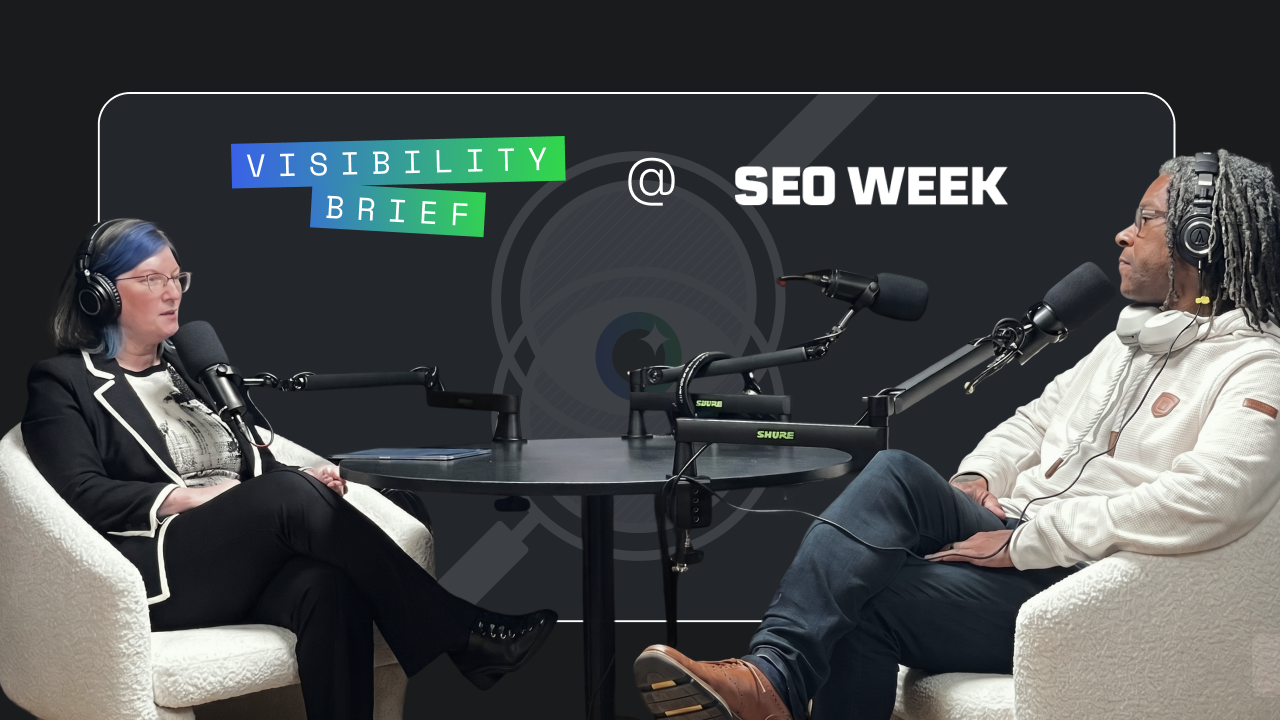
In this episode of The Visibility Brief, Rebecca Colwell (SVP of Marketing, Yext) sits down with Patrick Flanagan (SVP of Digital Development, Operations and Strategy, Simon Property Group) to explore what one of the world's largest retail real estate companies has learned about the customer experience.
During their discussion, Patrick shares how Simon manages local information across a massive portfolio, keeps critical details accurate as experiences change from location to location, and uses millions of reviews to understand what shoppers are actually looking for.
This episode breaks down:
Why traditional search and maps are still important in the AI era
How reviews can reveal what customers are really experiencing
Why hyper-local details matter
How Simon keeps local information accurate at scale
Why declining traffic doesn't necessarily mean declining visibility
If you're a marketing leader responsible for hundreds or thousands of physical locations, this episode offers a practical look at what it takes to stay visible when customers can discover you anywhere.
Episode Links
Transcript
00:00:00.200 — 00:00:28.840 · Speaker 1 You may have heard that the mole is dead, but the truth is, the best malls have evolved into genuinely compelling destinations with dining, healthcare, entertainment, and so much more. My guest today is Patrick Flanagan from Simon Property Group, a premier innovator in global retail destinations. And he's here today to talk about how he drives brand visibility and exceptional guest experiences that keep their properties thriving. Let's get into it. 00:00:36.480 — 00:00:39.080 · Speaker 1 Hi Patrick, welcome to the Visibility Breed. 00:00:39.640 — 00:00:41.160 · Speaker 2 Hi. Great to be here, Rebecca. 00:00:41.200 — 00:00:55.360 · Speaker 1 Before we dive in to all the businesses stuff, I would love for the audience to get to know you a little bit better. You are an avid cyclist, a cyclist and a runner, which I absolutely love. I do both of those things as well. How did you how did you get into it? 00:00:55.400 — 00:01:36.860 · Speaker 2 Yeah. So my lifelong affair with cycling started when I was about 14. Got my first job turning wrenches in my local bike shop. And even today I bike commute into the office. So it's, you know, near and dear to my heart. Uh, running the other hand was sort of an acquired taste. So my wife's an amazing runner. She's done all six Abbot World major marathons, and I think I got kind of jealous and or kind of blue, just always, you know, being on the sidelines, wishing that I could be out there doing it with her, um, seeing how fun she was having. So, um, little by little, you know, it's a kind of amazing thing. Uh, just small incremental changes in your in your life can really add up. And now it's a part of who I am, and always looking forward to it. 00:01:36.900 — 00:01:44.500 · Speaker 1 Oh that's incredible. I mean, and marathon training takes so much time as well. It's nice to probably have the opportunity to be up there with her for that. 00:01:44.980 — 00:01:49.060 · Speaker 2 Yeah, we love our Sunday morning. Long runs are a real treat, especially in the winter. 00:01:49.180 — 00:02:05.890 · Speaker 1 Yes, yes. Oh, they're so fantastic I love it. Well, in addition to running, you were also the SVP of Digital Development, Operations and Strategy at Simon Property Group. So tell us a little bit more about Simon Property Group and the real estate investment behind some of the coolest malls. 00:02:05.930 — 00:02:57.970 · Speaker 2 Yeah. So some property group is a publicly traded real estate investment trust. Um, we own and operate shopping, dining, entertainment and mixed use destinations. We really think of ourselves as sort of, um, the retail real estate industry leader and the focus on owning and operating kind of iconic properties that serve as vibrant hubs, and they really serve as powerful engines for the communities that they're in and they serve. Um, what that kind of breaks out to is, you know, we, um, big destinations around, um, the North America, Europe and Asia. Um, we have a portfolio of different types, you know, so we have everything from a regional mall, premium outlet and these, uh, kind of unique hybrid called Mills. Um, and those are kind of, you know, blending of traditional shopping, luxury dining, entertainment and residential, which I'll just say is, um, it's a lot more than just a mall at this point. 00:02:58.090 — 00:03:20.910 · Speaker 1 Oh my gosh. Yes. I'm a 90s kid. I love them all, but I think the mall of the 90s is very different than the destination that that your organization has built. So I was also under the mistaken impression until we were chatting at a brand visibility exchange event. I felt balls were dying and you set me straight on that. So what is actually going on with malls today? 00:03:20.950 — 00:04:30.260 · Speaker 2 Yeah. Totally. Right. Some malls have died or are dying. That is correct. But they aren't a Simon Mall. Um, you know the old adage, know location, location, location, it still is everything. You know, America truly is and has been over retail. And as such, there has been a sustained flight to higher quality retail assets by retailers and restaurants. And that moved to quality, um, which of course attracts the best shoppers. And that's, of course, the type of properties that we have and operate. So we have a lot of demand for our properties. But don't take my word for it. You can sort of look at any of the kind of financial measures NOI, FFO, stock price. Do you name it? Um, they all show steady growth in increasing demand. So. No, uh, malls are nothing, but, uh, there has been a, uh, a resurgence of even the younger generations, lots of third party, trusted, valid research out there showing even Gen Z calling it, you know, making it their home in their own way. It's still different than maybe nostalgic, you know, uh, you know, star caught, you know, style thing, you know, like Stranger Things, but it's authentic to them in a, in a new environment way. 00:04:30.420 — 00:04:47.220 · Speaker 1 Right. It's so wonderful to have a third place to congregate as well. Uh, especially for teenagers. I'm curious, you mentioned earlier that the mall has become more than just a place to go shopping. It's a destination for so much more than that. So tell me a little bit more about that. How do you how do you make it more of a destination? 00:04:47.220 — 00:06:03.860 · Speaker 2 We have evolved beyond just being a place to acquire things. There's so many ways of getting a item to your house, right? And of course, going to physical shopping center still is a big part of that. But it's creating a robust offering that still incorporates retail as a as a taught a key pillar. But it's dining, entertainment, fitness, wellness, residential, all these other areas have are playing a substantial role in driving, you know, vibrancy and traffic. Right. So an example, we have some centers where there are more non-retail tenants than retail, right. So it's not just like, oh, a little sprinkling, but it's a substantial, you know, shifting of the store mix and to kind of cater to this more experiential, you know what what's desiring. We don't go out just to our stuff. Like that's the trip to the grocery store. It's a very utilitarian thing we're looking for, you know, an experience that is something that might delight, has discovery, you know, is mixed with something more than just, you know, acquiring goods. So that's the type of thing that we're out to create, are creating. And you're right. It's a complete rewiring of our DNA from our tenant mix to how we shape our properties and creating these more sustainable, durable communities. 00:06:03.900 — 00:06:26.820 · Speaker 1 Thank goodness for that because, well, confession, I hate shopping like I am not a clothing shopper, but I have to. I have a wedding coming up and I need to get something new to wear, and the full experience makes them all such a better destination. When I go, we're going to have a nice dinner, do some other things as well. So. So thank you for pushing on that and making it a reality. 00:06:26.860 — 00:06:42.700 · Speaker 2 Yeah, our shoppers are pushing us. In all honesty. It's what they demand, expect. But we need and want to deliver, right? It is a a two way street. You know we build it. They come but they we need to build what they want to come. You know. So it is a, you know, a kind of a bidirectional flow. 00:06:42.740 — 00:06:55.460 · Speaker 1 I'd love to understand a little bit more about your focus at Simon. How much of your time is allocated to serving the needs of your end consumer, the shopper who's coming to the mall versus, you know, your tenants that are leasing property? 00:06:55.500 — 00:08:37.590 · Speaker 2 Yeah. The 8020 rule would probably be a very valid measure here. So 80% of my team's time, it probably of our greater marketing group's time is spent on consumer focused, you know, outbound marketing. We want to have and have a amazing direct relationship with the end shopper. Right. We're trying to drive foot traffic first and foremost to our shopping centers, trying to get that incremental store visit or discovery. Right. So you're there, kind of get you to go to one additional store that you haven't maybe ever visited, or it's been a long time since you've wandered in. And then if so, can I get an incremental purchase? Right? Core KPIs of the business 20% might be more intended marketing and our advertisers. So that's where we're trying to create loyalty for, you know, there as we deliver, you know, high quality locations. It's a big, huge scale that makes up. We have over a billion shopper visits a year across our portfolio. I know a lot of people come to our doors, and that's certainly what helps. You know, our tenants, you know, introduced their products to a very, uh, in-market shopper and of course, you know, my world is a digital focus. So that's things like, you know, digital wayfinding our sign of plus loyalty rewards program. And we just do a ton of content based marketing, always trying to surface the best of what's new now. Right. So you don't have to look at the mall had 200 tenants, which some people have more of that actually. You'd have to look at 200 Facebook pages, potentially 200 Instagram screens, 200 TikTok pages, 200 websites. And then you can probably know what's going on. That's our job, right? We try to make that really easy for you and like bring the best of what's new stuff. It's a new tenant, a brand new menu offering an awesome in-store event. We want to bring that to you. And that's the value that we can add to both the retail and the shopper. 00:08:37.710 — 00:08:42.110 · Speaker 1 Very nice. So you're curating the best part? I love that. 00:08:42.270 — 00:08:43.510 · Speaker 3 Even just for mix. 00:08:43.710 — 00:08:45.470 · Speaker 2 It's literally from the. 00:08:45.470 — 00:08:46.870 · Speaker 3 Physical footprint to. 00:08:46.910 — 00:08:50.670 · Speaker 2 You know, the actual end marketing content. We use that word. 00:08:50.670 — 00:08:51.350 · Speaker 3 Constantly. 00:08:51.350 — 00:08:52.030 · Speaker 2 In what we do. 00:08:52.070 — 00:09:00.580 · Speaker 1 Patrick, I would love to understand how consumers are finding their way to your malls. I imagine that that process has changed quite a bit. 00:09:00.620 — 00:09:34.940 · Speaker 2 It has. So the core tools are still there, you know. Traditional search, vertical directories like Yelp and TripAdvisor and plenty of map platform service. Still the core foundation. But of course, AI being the gross vehicle that it is, um, is delivering an ever growing a lot of that traffic invisibility. So if we take a little bit of a of a double click on, you know what that actually means that we look at it from crawlers, um, make up about 46% of our all the AI traffic that kind of comes through. 00:09:34.980 — 00:09:36.020 · Speaker 3 Search. 00:09:36.220 — 00:10:26.760 · Speaker 2 AI search is about 44% in assistance is about 10%. So there's lots of different kind of flavors. Of course, that gives a little bit of a break out of uh, so that's changing too. I mean, that's today. And if I look at it 30 days ago, it sometimes swings 10% at any direction. So it's not a static, you know, like number. A lot of times you'll kind of get traffic patterns that are pretty etched in, but these AI ones are highly dynamic, in which players and models and frontier labs, those jump around all the time as well. So you'll see they might be you'll see a model retraining that's happening almost before it's publicly announced. Like you'll see, oh, why is Microsoft just smashing your site with a crawler then, you know, two, four weeks later like, oh, they just had a big model announcement. You can see the writing on the wall as they kind of because there wasn't any good reason why they would just be, you know, crushing it with, uh, with, uh, crawlers. 00:10:26.800 — 00:10:33.240 · Speaker 1 What do you think the data is telling you about details that people are looking for before they come into the visit? 00:10:33.280 — 00:11:28.420 · Speaker 2 Yeah, they want very local, specific information. You know, the hours and phone number maps. There's a lot of ways of getting that. And a lot of partners do a great job of that. But they're looking for those hyper local details. They want information on parking. They want information on wheelchair access. They want our changes. They want this exact in-store yoga free clinic that Ala yoga is putting on. They want the tenant changes. Brand new stores open today or this weekend because they're trying to plan. So it's really, really fine grained information that they're seeking. And often that's where we can, you know, have a really key place to play at this point and get in the hours a lot of places. But knowing that the grand opening is this Saturday at 10 a.m., that may not be as widely understood yet. So we have a a lane, a key place to still deliver high value. 00:11:28.500 — 00:11:34.420 · Speaker 1 So how do you think about your job then as a marketer to to help the consumers find the information they're looking for? 00:11:34.420 — 00:12:17.450 · Speaker 2 Do you think of ourselves as guides? You know, we're first, you know, trying to guide you to our own, you know, solutions if we could if we have a bias. Right. So we'd love to introduce you to the world of Simon through our own apps, sites, digital directories, whatnot. It's a branded experiences you might, you know, offer or join their loyalty program. We could add additional value to your shopping business, but we fully admit and understand that it has so many third party tools, sites, apps, platforms. That's okay. So if we're going to steer, if you're going to be steered there by your own preference or bias, that's okay. We want to make sure that, yeah, your outcomes there certainly are influenced and guided as best as we can influence. Right. So we don't control it but we can influence it. Right. 00:12:17.490 — 00:12:28.250 · Speaker 1 That's right. That's exactly right. So I'd like to talk about that a little bit. You've been using Ajax listings for 13 years or so. Um, yeah. 00:12:29.610 — 00:12:40.370 · Speaker 1 Uh, to help manage that process and ensure that those third party directories and listings have, you know, accurate, consistent information everywhere. Do you remember the early days? Like what problems were you trying to solve at that time? 00:12:40.410 — 00:13:49.710 · Speaker 2 Yeah, it was, uh, a really poor one. Um, so way back then, we were and still are amazed just how often that the external partners had no information. Ah, shopping mall. Like how I could understand if it was a local doctor's office or a brand new business, but these shopping centers have been there for 2030 years. They're 50 acres plus in size. And these are massive businesses, right, containing 2400 other businesses that call our home. They weren't listed. Listed. Incorrect information. Missing data. Outdated data. No attributes. Poor attributes. You name it. We saw it. It was. We were trying to do that through some very time consuming manual methods. But then the magic of, you know, updated one centralized kind of redistribution, republishing across the huge network made our life continues to make our life so much better, because we do really need to make sure that we are optimized fully correct, you know, doing everything we can that as, again, we talked about those third party channels, if that's your preference and choice, that you do find us and you find us as best as that channel will allow us to be found, right? 00:13:49.750 — 00:14:05.180 · Speaker 1 You mentioned accuracy, which I find to be really, really important. The last thing I want to do is pull up information about mole hours or saw hours and then get there and they're closed. It's super annoying. Um, how do you manage those details across so many different locations? 00:14:05.220 — 00:15:09.040 · Speaker 2 Luckily, we have an amazing field marketing team that they know their local properties better than anyone in the world. So we look to empower that frontline team that is the closest to the data to maintain it and cure it. And they know if there's a sudden snowstorm and they're going to have to close at 2 p.m. just to know for the safety of the shoppers employees, they're going to make their call and just do it and update you extra. I may not know that's even happening, right? I'm hundreds, thousands of miles away. The same thing, right? We might be deploying a brand new amenity as part of a reimagining of that shopping center, right? We're deploying a billion plus dollars in capital, uh, continuously per year. And we're updating things all the time so that we just added a new, let's say, nursing lounge in one of our shopping centers. I may not even know what happened, but that's an important amenity. It serves a very key constituent, you know, our mothers. And that local team needs to make sure that that gets reflected in all of our different, um, content maps and location based marketing, uh, activations. So they're the ones that are going to know it, do it, you know, and do it best. 00:15:09.080 — 00:15:18.200 · Speaker 1 What gives you the trust and the confidence to enable these local teams to do that? You know, not not all organizations are structured that way. 00:15:18.280 — 00:16:23.620 · Speaker 2 I don't think we could do without doing that. So we've done great training. We have governance in place in the system, operational oversight. So for example, in the platform, we were able to define what an individual can or can't do a by a role. So you have to call custom roles to our marketing directors. They can change the hours. Sure. Great special hours. Wonderful. Can't change the phone number for example. That's something that should probably either never change or if it changes. It's a very impactful change that needs to be like well understood and replicated across many, many channels, right? Even beyond our, you know, external third party stuff that helps with like our own website needs to make sure we get our phone number change if it ever happens. So, um, things like that really make it, um, work. Well, that, you know, you're empowering those things where they change is allowed and then you're preventing just silly human mistakes. Like the name of our shopping center should never change unless there is a very, very good reason. Occasionally happens. You know, we would do a big rebrand, but by and far, like one person should have control of that, right? Not, uh, hundreds of field users. 00:16:23.660 — 00:16:49.140 · Speaker 1 Right. Very sensible approach. A few times you have mentioned that your, uh, locations have a reputation for being premier destinations. I'd love to talk about how you created that reputation and how you manage it. So at some point in your UX journey, you layered reputation management on top of your listings. So tell me a little bit about your thinking at the time and why reviews are so important. 00:16:49.300 — 00:17:47.610 · Speaker 2 Yeah, we realized early on that Visibility, not just to use the podcast name was so key, and that was really what was driving force behind reviews, right? How does a bot or an AI or back then just a search engine know its best or top? You know, it looks at number reviews, recency reviews, other reviews, responded to how quickly they responded to the settlement reviews and then, you know, total reviews, you know, all these factors. So we're like, mm. If reviews are so important to the search engine, which for us is a huge source of traffic and visibility, then we have to manage, monitor and ultimately even encourage more of them as it's mission critical to us, you know, growing and increasing our visibility. So, um, if AIO, SEO, Gio, and everyone I call it these days is, you know, key in your into your arts reviews, I think are just bedrock, you know, to actually getting and driving that portion forward. 00:17:48.290 — 00:17:54.030 · Speaker 1 Are there operational insights that you've been able to derive from the reviews, themes that you've been able to pull out. 00:17:54.270 — 00:18:55.580 · Speaker 2 So absent of any awesome impacts that it can have? Yes, they they literally help us run our business better every single day. And so we do a ton to, um, parse and get that direct local intelligence that really is really like they're not complaints, right? Like even though there are some that are just complete noise, there are so many valuable thoughtful. I mean, I always agree with everything in them, but there is truth. There is a perspective that has to be listened to in. Yeah, we mind that constantly. So we do aggregate them. We disseminate them at a local level into, uh, individual shopping centers have access to theirs. We have, you know, response mechanisms in place, you know, from both human AI and, uh, manage responses, you know, so we're doing as much as we can to engage with those. But yes, they are a amazing place of the voice of the shop you mentioned. 00:18:55.580 — 00:19:04.380 · Speaker 1 You share it with the locations. Are you using the reputation and insights in any way to prioritize action or to reward your top performers? 00:19:04.420 — 00:20:24.000 · Speaker 2 Yeah, so we first we analyze everything through a bunch of sediment keyword filters. So we have like 3.4 million reviews for example. It's a huge pile. And so we take all this through this process and we try to figure out is this a review about parking? It's a review about our WiFi. Here's a review about the traffic leading into or out of a shopping center. Is it a review about, I don't know, cleanliness in housekeeping? It could be all these very hyper focused little topics. And each of those is then mapped to one or more people, teams, groups inside the company. So if you're the parking team, which we have a group that manages parking here, um, they get all reviews about parking regardless of where in that country it happens good and bad, right? Give them everything. It's organized. They can sort it, sift it. Right. If you're the person you know, deep inside of our network team, inside of the IT area that's functioning, you know, running the the on center Wi-Fi networks. Let's let's share that information with them if there is a downed AP or a dead zone. Our shoppers know they're there. Often, you know, a great canary in the coal mine of, you know, finding these things that we can do better at. So yeah, don't we're not just treating this. Oh, yeah. It's just fodder for the AI. And it is that also it's a hugely important way of improving day to day like our actual business. Um, so yeah, the are used constantly get real time alerts on, you know, if it's like a really 00:20:25.120 — 00:20:49.080 · Speaker 2 serious situation. You know, we have filters for that so that we can at least understand and assess and figure out what, if anything, need to do. But I highly encourage you that those are not the people I think of as the circular recycling bin, you know, don't really matter. They are the least to us. One of our best, clearest, consistent streams of of what we can do often better. 00:20:49.120 — 00:21:00.940 · Speaker 1 Okay. We're going to pivot into our final section. This is our stop, start and rethink section. So you've been in this industry for a long time. What would you advise marketers to start doing? 00:21:00.940 — 00:21:39.020 · Speaker 2 I'd start measuring how much AI source traffic is coming to your website. And then if you can, what the average scrape to referral ratio is, I think it'll blow you away. If you do that, I think you'll see a massive amount of scraping is happening and how little referral traffic is being handed out to your brand's website. I think you can reshape your thinking and just how many answers and insights and visibility is being delivered within those AI searches, or authentic answers that would never result in a click through. It's still a win. It's just a different kind of win than we might traditionally see. 00:21:39.060 — 00:21:49.060 · Speaker 1 Oh, that's really interesting. So maybe expanding my reporting dashboard beyond clicks include that metric. That's great. Great recommendation. Um, what should I stop doing? 00:21:49.100 — 00:22:50.630 · Speaker 2 Yeah. So it's similar. So I'd stop looking at your declining organic traffic as a search problem and instead reframe the situation right, so that things have shifted left. And what I mean by that is they're just getting their answers in a different earlier way. Right. They used to have to come to your site, you know, to get the answer, but they're getting it increasingly, you know, in a earlier form, probably from an AI search summary or an AI chat assistant kind of thing. So it's not that you're not getting talked about or share or voice, it's just shifted. And you just need different tools, right, to help understand look. And so it's one of the reasons why we're using Scout is just to get a better handle on it, to measure it, to see what we can do to influence it. Of course. Right. We don't often just want to be happy with what we always want more. So that's a great way of doing that. And yeah, probably we'll see. We'll stop just focusing on oh, worries me. AI is crushing my business. I'm not getting the traffic I used to. You're getting a different kind of engagement or interaction. It's just not a click. 00:22:50.670 — 00:22:52.510 · Speaker 1 And what should we be rethinking? 00:22:52.550 — 00:23:37.990 · Speaker 2 I'm gonna harp on the on the review on. It's not just a big pile of complaints. It's a wonderful insight stream that's ultra specific. It's real time. It's full of nuance inside sediment. Figure out a way to make sense of it. Parse it, make it work for your business. Uh, I can't imagine life without it. It would just be. I mean, might as well just go back to, I don't know, the comment cards, but no one's going to go find them all. Office. I mean, there's a there's a, there's a challenge. Tried to find them all office. Um, but you know how to find Facebook. You know how to find Google. You know how to find Yelp, right? So that's what you're probably doing at this point, which is fine. You know, we're listening. We're here and we want to be wireless and we want to learn and do better. 00:23:38.030 — 00:23:45.990 · Speaker 1 Excellent. Well, speaking of listening and learning, how can folks connect with you if they want to hear more about what you're doing on LinkedIn? 00:23:46.030 — 00:24:08.980 · Speaker 2 Like everyone, I do a pretty poor job of managing the inbox They're struggling with corporate, you know, regular email inbox. I don't need another inbox in my life. LinkedIn, but I got one whether I wanted one or not. So you can do that. I'll try my best. I'm also on Instagram at Na Na Poly. You could catch that where I'm running or riding around the states of the globe occasionally. 00:24:08.980 — 00:24:18.580 · Speaker 1 So fantastic. Well, thank you so much for your insights today. Um, super, really fascinating. And we'd love to have you back again sometime soon. 00:24:18.620 — 00:24:23.579 · Speaker 2 Oh, lovely. Yeah. So good to be in here with you. And, yeah, it's been a lot to 00:24:24.620 — 00:24:34.260 · Speaker 2 really enjoy what you're trying to do for the greater community. Like just helping us all navigate these changing times and understanding how we can better be seen. 00:24:35.900 — 00:24:38.300 · Speaker 1 Wow, that's so kind. Thank you so much. 00:24:39.340 — 00:24:49.740 · Speaker 1 That's a wrap on this episode of The Visibility Brief. If you found this useful, subscribe, leave us a review or send this to a colleague who needs to hear it. We'll see you next time.